
„`html
Trends: Impedance in POC & Microfluidics
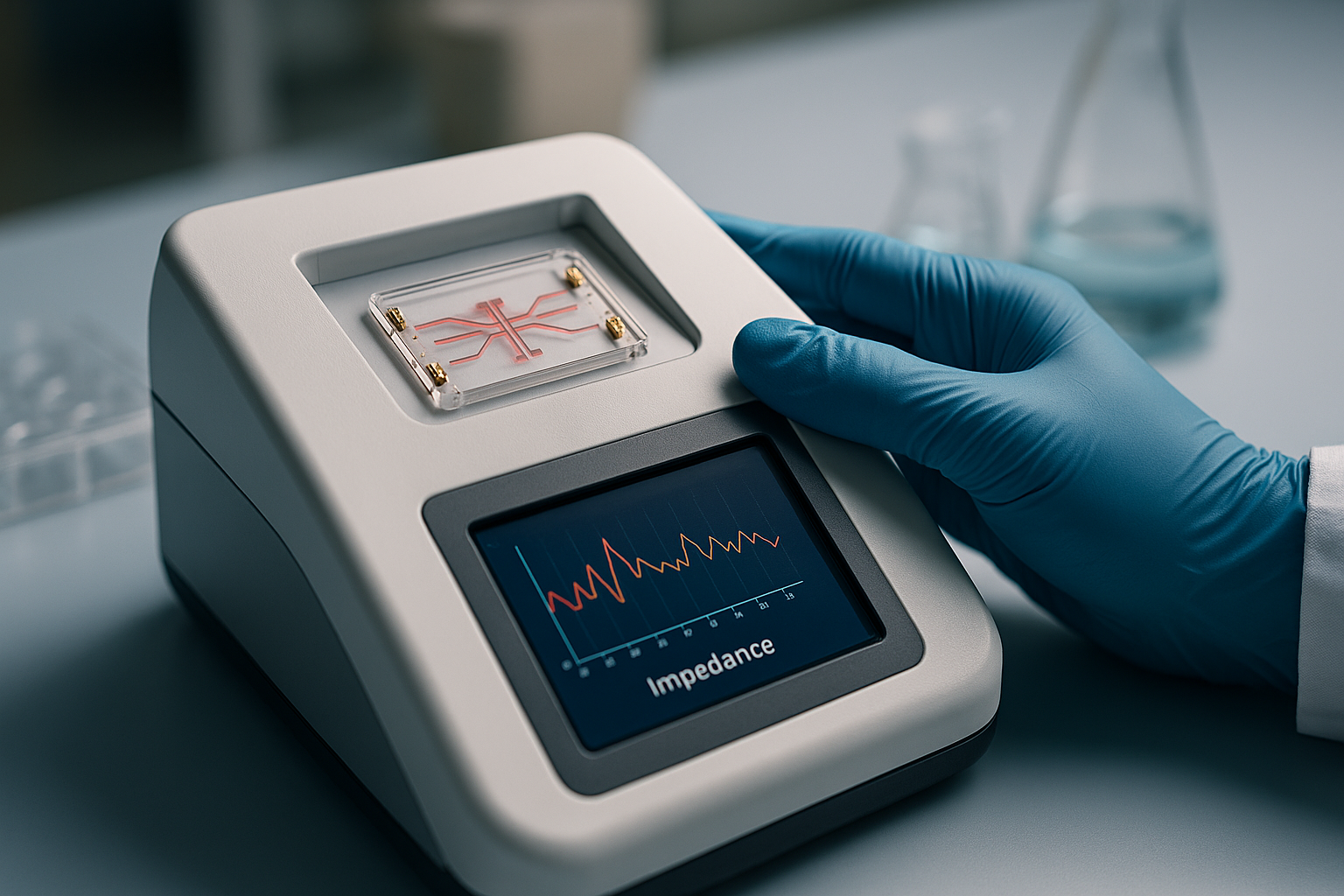
Impedance-based sensing is emerging as a revolutionary tool in the fields of Point-of-Care (POC) diagnostics and microfluidics. Traditionally, laboratory and diagnostic practices have heavily relied on optical and chemical assays. However, the adaptability and precision of impedance sensing are shifting paradigms, providing real-time monitoring capabilities with high sensitivity and specificity. In this article, delve into how impedance trends are shaping POC diagnostics and microfluidic technologies, contributing to the advancement of life science research and clinical applications.
Understanding Impedance-Based Sensing
Principles of Impedance Measurement
Impedance is the measure of the opposition a circuit presents to the flow of alternating current. In bioelectronics, impedance measurement provides insights into the properties of biological cells or fluids by detecting changes in electrical conductivity. This method has several advantages over traditional biochemical assays:
- Non-invasive and label-free
- Capable of real-time analysis
- High sensitivity to changes in cell morphology and behavior
Through smart sensor integration, impedance technology is transforming diagnostic approaches, offering scalable and customizable solutions for various POC applications.
Challenges and Limitations of Traditional Diagnostic Approaches
Conventional Methods vs. Impedance Sensing
Traditional POC diagnostics and microfluidic methods often depend on optical or chemical reactions, which can be time-consuming and require complex reagents. Such techniques may face limitations including:
- High dependency on skilled technicians for interpretation
- Delayed results due to lengthy preparation and analysis times
- Potential for human error in manual operations
Impedance-based methods address these challenges by automating the detection process and ensuring consistent performance across varying assay environments.
Integration of Impedance in POC and Microfluidic Devices
Technological Advances and Automation Trends
Recent technological advances have facilitated the integration of impedance sensors into POC and microfluidic devices. This is partially driven by the miniaturization of electronic components and improved fabrication technologies. Key trends include:
- Development of compact, highly-integrated sensor platforms
- Enhanced data analytics powered by AI and machine learning
- Greater connectivity to enable real-time data sharing and remote analysis
Automation through impedance-based systems enables precise control over experiments, enhancing reproducibility and reliability in laboratory diagnostics.
Workflow Optimization in Laboratory Experiments
Applications in Live-Cell Imaging and Monitoring
Impedance sensing has found practical applications in workflows involving live-cell imaging and monitoring. Solutions like the zenCELL owl, a compact and incubator-compatible imaging system, leverage impedance technology to perform continuous analysis of cell behaviors. Key benefits include:
- Real-time cell monitoring without disrupting the incubation environment
- Automated data collection, minimizing manual intervention and errors
- Wide range of applications from migration assays to organoid cultivation
Such systems facilitate high-throughput screens (HTS) and provide a robust platform for various analytical applications in biotechnology and pharmaceutical research.
Incubator-Based Imaging: Improving Reproducibility and Data Quality
The Role of Incubator-Compatible Systems
Incubator-based imaging systems that incorporate impedance sensing, like the zenCELL owl, significantly enhance experimental reproducibility. They enable minimal disturbance to cell cultures while providing comprehensive data. By embedding advanced imaging technology within the incubation process, researchers can:
- Ensure consistent environmental conditions for cell health
- Track cellular proliferation and differentiation with precision
- Reduce data variability across experiments
These advancements emphasize the growing trend of integrating impedance analysis within standard laboratory workflows, providing crucial insights into complex biological systems.
Continue reading to explore more advanced insights and strategies.
„`
„`html
Building a More Connected Diagnostic Ecosystem
Leveraging IoT and Cloud Integration
The advent of Internet of Things (IoT) technology within impedance-based devices is revolutionizing the connectivity of diagnostic systems. By facilitating the seamless transmission of data to cloud platforms, healthcare providers and researchers can access real-time diagnostic results from virtually anywhere. This increased accessibility allows for swifter clinical decision-making and enhances patient monitoring. For example, IoT-enabled impedance analyzers in rural clinics can transmit patient data to specialist centers in urban areas, bridging the gap between resources and need.
- Implement IoT systems to enable real-time monitoring and data transfer.
Enhancing Precision with Machine Learning Algorithms
Predictive Analytics and Impedance Data
Machine learning (ML) algorithms are becoming integral in processing the vast amounts of data generated by impedance-based devices. By training models with historical data, these algorithms enhance the predictive accuracy of diagnostics, providing advanced insights into disease progression and treatment efficacy. In oncology, for instance, ML-enhanced impedance sensing can track tumor responses to treatments over time, allowing personalized adjustments to therapy protocols.
- Incorporate machine learning tools to enhance data interpretation and prediction accuracy.
Tailoring Impedance Technology to Specific Applications
Custom Solutions in Medical Diagnostics
Customizing impedance-based technologies to fit specific diagnostic applications leads to more accurate and relevant data collection. In the field of hematology, impedance cytometry can be tailored to distinguish between different cell types in blood samples by measuring their size and electrical properties. This customization not only improves diagnostic specificity but also reduces the time to result, ultimately impacting patient outcomes positively.
- Work with developers to tailor impedance solutions to specific diagnostic needs.
Implementing High-Throughput Screening (HTS) Technologies
Transforming Drug Discovery and Development
High-throughput screening (HTS) is crucial in drug discovery, and impedance-based sensing enhances this process by allowing for non-invasive and real-time observation of cellular responses to potential therapeutics. Systems like the zenCELL owl facilitate HTS by enabling simultaneous workflows that analyze multiple samples under identical conditions. This not only speeds up the identification of effective drug candidates but also provides comprehensive data on toxicity and mechanism of action.
- Utilize HTS to accelerate drug discovery and validate therapeutic targets.
Case Study: The Role of Impedance in Infectious Disease Testing
Addressing Global Health Challenges
A notable example of impedance technology in action is its application in rapid infectious disease testing. During the COVID-19 pandemic, impedance sensing was used in POC tests to detect viral particles quickly and accurately. These tests demonstrated how impedance technology could provide robust results under challenging conditions, offering a critical tool in global health management.
- Explore impedance technology for rapid, accurate infectious disease diagnostics.
Overcoming Bottlenecks in Data Integration and Analysis
Streamlining Interoperability and Workflow
One of the significant challenges in adopting new diagnostic technologies is the integration of data from diverse sources. Impedance-based systems are increasingly developed with interoperable frameworks that streamline data integration across platforms. This interoperability ensures that impedance data can be easily combined with other diagnostic data, leading to more comprehensive analyses and informed decision-making.
- Focus on systems featuring interoperable capabilities for seamless data integration.
Future Directions: Expanding Impedance Applications Beyond Diagnostics
Exploring New Frontiers in Bioengineering and Environmental Monitoring
The potential applications of impedance technology extend beyond diagnostics into fields like bioengineering and environmental monitoring. In bioengineering, impedance sensors are being used to develop advanced wearable devices that monitor vital health parameters continuously. Meanwhile, in environmental monitoring, impedance-based sensors can detect pollutants and assess water quality, providing essential data for ecological conservation initiatives.
- Invest in cross-disciplinary research to explore new applications of impedance technology.
Next, we’ll wrap up with key takeaways, metrics, and a powerful conclusion.
„`
„`html
Innovative Integration with Point-of-Care Testing
Agility and Accessibility in Immediate Diagnosis
Point-of-Care (POC) testing has seen a surge in reliance due to the need for swift and precise diagnostic processes. The integration of impedance technology into POC systems enhances these features by providing accurate and immediate data at the patient’s side. Such systems are instrumental during pandemics, where rapid and portable solutions are essential. By minimizing the time between sample collection and result interpretation, impedance-based POC testing aids in timely treatment and reduces healthcare burdens, especially in under-resourced communities.
- Integrate impedance technologies into POC systems for real-time, bedside diagnostics.
Harnessing Microfluidics for Enhanced Sensitivity
Maximizing Efficiency in Small Volumes
Microfluidics technology beautifully complements impedance-based systems by allowing precise manipulation of miniature sample volumes. This synergy not only increases the sensitivity and specificity of biosensor tests but also dramatically lowers the costs and resources needed for diagnostics. Through innovations in microfluidic impedance cytometry, labs can conduct highly detailed cellular analyses with minimal samples, significantly improving the throughput and efficiency of diagnostic processes.
- Explore microfluidic impedance applications to enhance diagnostic sensitivity and cost-efficiency.
Conclusion
The advancements in impedance technology are reshaping the landscape of medical diagnostics and offering unprecedented opportunities across various sectors. From improving diagnostic precision and accessibility through the Internet of Things and machine learning algorithms, to tailoring applications for specific needs, the benefits of impedance technology are clear and impactful.
This transformative era of diagnostics is underscored by the successful integration of impedance-based sensors in high-throughput screening, drug discovery, and point-of-care testing. This integration not only accelerates drug development timelines but also brings vital diagnostic tools closer to patients, ensuring quicker medical responses where they are most needed.
Moreover, as impedance technology penetrates new domains such as bioengineering and environmental monitoring, the cross-disciplinary potential of these systems promises to revolutionize how we engage with the natural world and manage health sustainably. Implementing systems that are interoperable across platforms further ensures that reliable data underpins all decisions, providing increased accuracy and confidence in diagnostic processes.
Given these compelling developments, the journey of impedance technology is far from over. It is essential to continue investing in innovative research and fostering collaborations between disciplines to explore unexplored territories and improve existing methodologies. As pioneers in technology-driven healthcare solutions, the responsibility lies in harnessing this momentum to push the boundaries of what is possible, ensuring that diagnostic innovations equitably reach all corners of the world.
In embracing these technologies, the future of diagnostics becomes not only a beacon of hope for better healthcare but also a testament to human ingenuity’s capacity to adapt and overcome challenges. The call to action is clear: invest in innovation, promote interdisciplinary collaboration, and commit to delivering groundbreaking diagnostic solutions that ultimately lead to improved global health outcomes and a better quality of life for all.
„`
 German
  English
Schreibe einen Kommentar