
„`html
Design Criteria for Impedance Multiwell Plates
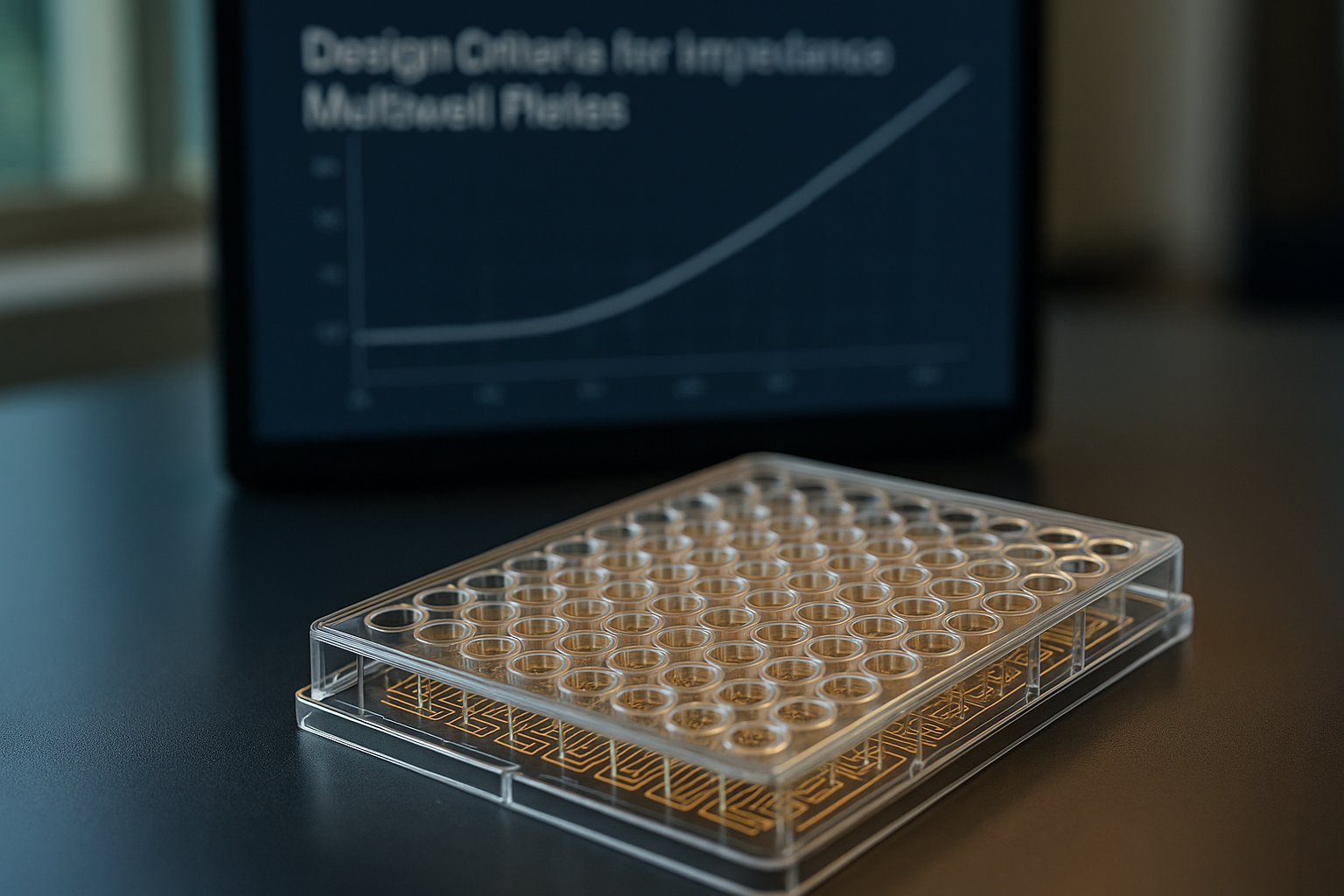
Impedance multiwell plates are pivotal in advancing modern cell culture research by enabling detailed analysis of cellular activities and properties. Their application is critical for real-time monitoring and studying diverse cell behaviors, providing invaluable data for pharmaceutical development, diagnostics, and various R&D applications. This detailed guide explores the fundamental design criteria required to develop efficient impedance multiwell plates, focusing on material selection, injection molding considerations, and ensuring compliance with cGMP and GMP regulations. Through an in-depth look at state-of-the-art manufacturing practices and quality control processes, this article aims to furnish researchers, lab managers, and biotech professionals with the essential insights needed to leverage these sophisticated tools effectively in their work.
Understanding the Basics of Impedance Multiwell Plates
Critical Design Factors
To design impedance multiwell plates effectively, several important factors must be considered. These include the selection of appropriate materials that ensure biocompatibility and minimize interference, the implementation of precise design-for-manufacturing (DFM) protocols, and the execution of accurate surface treatments to enhance adhesion and conductivity. The choice of materials such as polystyrene (PS), polypropylene (PP), or cyclic olefin copolymer (COC) is influenced by their chemical resistance, optical clarity, and mechanical properties, which are essential for minimizing background noise and ensuring reliable signal readings.
- Biocompatibility and chemical resistance of materials
- Surface treatments to enhance adhesion and signal clarity
- Dimensional accuracy and reproducibility in design
Material Selection and Surface Treatments
Ensuring Optimal Performance
The significance of selecting the right material and applying suitable surface treatments cannot be overstated. PS is favored for its optical properties and ease of manufacturing, while PP is chosen for its superior chemical resistance. COC is increasingly popular due to its low autofluorescence and high optical clarity, which are critical in live-cell imaging applications. Surface treatments, such as tissue culture treatment (TC), non-treated, or specialized coatings, are tailored to align with specific cellular or molecular interactions, impacting cell attachment, growth, and experimental outcomes significantly.
- PS: Preferred for optical and manufacturing advantages
- PP: Chosen for chemical resistance needs
- COC: Ideal for applications requiring low autofluorescence
Transitioning from Prototyping to Full Production
Tooling and Scale-Up Considerations
The journey from initial prototyping to full-scale production of impedance multiwell plates involves several stages. Beginning with prototype development, using pilot tooling methods to test and refine designs, is crucial for validating concepts. Gradually moving towards larger scale production requires stringent focus on scalability, process robustness, and maintaining dimensional accuracy throughout the production run. This transition must incorporate advanced quality management systems to ensure consistency and reproducibility, vital for meeting the stringent demands of regulated environments.
- Prototype development and pilot tooling
- Emphasis on scalability and process robustness
- Compliance with quality management systems
Injection Molding and Process Control
Ensuring Consistency and Compliance
Injection molding stands as the core manufacturing technology for impedance multiwell plates, requiring rigorous process validation and control to achieve consistency across batches. Key process parameters such as temperature, pressure, and cycle times must be carefully monitored and optimized to maintain the integrity and functionality of the plates. Documentation and traceability are indispensable in regulated environments, ensuring each batch meets the necessary standards and allows for effective risk management and change control.
- Critical process parameters: Temperature, pressure, cycle time
- Importance of documentation and traceability
- Risk management and change control procedures
Application in Regulated Production Environments
cGMP and GMP Manufacturing Standards
Operating within cGMP and GMP environments necessitates a robust approach to quality management and production controls. The distinction between development environments and compliance at production levels such as cGMP and GMP is crucial. Implementing stringent qualification and validation principles, alongside batch documentation and effective change control, ensures that the quality of multiwell plates is maintained throughout their lifecycle. This compliance is key to serving pharmaceutical and diagnostic-grade needs, reflecting on manufacturers‘ capabilities to deliver reliable and consistent high-quality labware.
- Differentiation between environment types: Development vs. Production
- Importance of qualification and validation
- Comprehensive batch and lifecycle management
Continue reading to explore more advanced insights and strategies.
„`
„`html
Advanced Surface Engineering Techniques
Enhancing Cell Interaction and Signal Clarity
Advanced surface engineering techniques play a critical role in optimizing impedance multiwell plates for specific cellular studies. Methods such as chemical vapor deposition (CVD) and physical vapor deposition (PVD) can introduce nanoscale surface modifications that significantly enhance cell attachment and proliferation, crucial for assays requiring high cellular activity and interaction. For instance, applying specialized coatings like hydrogels or biofunctionalized nanoparticles can tailor the surface properties to specific biomedical applications, such as promoting stem cell differentiation or cancer cell proliferation studies.
- Use CVD or PVD for precise surface characterization
Data Integration and Smart Labware
Leveraging IoT and AI for Real-Time Monitoring
The integration of Internet of Things (IoT) technology with impedance multiwell plates opens a frontier of smart labware that enables real-time data collection and analysis. Embedding sensors within the plates allows for continuous monitoring of cell impedance changes, thus providing precise measurements and insights without interrupting the experiment flow. Artificial intelligence (AI) algorithms can further analyze this data to predict trends and detect anomalies swiftly, increasing the accuracy and reliability of experimental outcomes. For example, an IoT-enabled multiwell plate system can alert lab personnel of unexpected impedance spikes, facilitating immediate remedial action.
- Implement IoT to enhance real-time monitoring capabilities
Sustainability in Manufacturing Practices
Eco-Friendly Approaches for Future-Ready Production
Sustainability in the production of impedance multiwell plates is becoming increasingly important. Employing recycled materials like reprocessed PS or innovative biodegradable polymers can reduce the environmental footprint. Moreover, optimizing the manufacturing process to minimize waste, such as through closed-loop systems that recycle heat and materials, contributes significantly to sustainable practices. This shift not only aligns with global environmental goals but also resonates with customers in the biotech industry seeking eco-friendly lab solutions.
- Use recycled or biodegradable materials to reduce waste
Customization for Diverse Applications
Adapting Multiwell Plates for Targeted Research Needs
Impedance multiwell plates can be customized to cater to various applications, from drug screening to toxicology studies. By altering the well size, shape, and configurational parameters, researchers can optimize plates for specific cell types or assay requirements. A case study involving a pharmaceutical company demonstrated that customization allowed for increased throughput and more accurate drug efficacy assessments by adapting the plate design to accommodate varying cell densities and growth patterns.
- Customize well configurations for specific research goals
Ensuring Robustness in Harsh Experimental Conditions
Strategies for Maintaining Plate Integrity
Robustness under various experimental conditions is a critical criterion for impedance multiwell plates. Techniques such as strengthening structural components through reinforced plastics or co-polymer blends can significantly enhance durability, even under extreme temperature variations or chemical exposures. Additionally, strategic reinforcement of high-stress areas, such as the plate edges and corners, can prevent deformation or wear, thereby extending product life and reliability, demonstrated in studies with high-automated environments.
- Extend life through material reinforcement and specific design modifications
Quality Assurance and Calibration
Ensuring Accuracy Through Rigorous Testing Procedures
Rigorous quality assurance (QA) procedures are essential to ensure the precise functionality of impedance multiwell plates. This includes calibration through comparative analysis with known standards and implementing sophisticated testing protocols such as electrical conductivity tests and dimensional verifications. The deployment of these QA measures can effectively reduce variability and enhance the reproducibility of experimental data, as illustrated by industry best practices adopted by renowned labs.
- Regularly calibrate and conduct QA tests to ensure data integrity
Cost-Effectiveness in Design and Production
Balancing Performance with Affordability
Developing impedance multiwell plates that are both high-performing and cost-effective often revolves around innovative design and economies of scale. Leveraging concurrent engineering techniques allows for the simultaneous consideration of manufacturability and cost-reduction strategies during the design phase. For example, implementing high-efficiency manufacturing practices, such as automated assembly lines, can reduce labor costs and increase output. Additionally, partnerships with material suppliers can yield bulk discounts, aiding price competitiveness without sacrificing quality.
- Employ concurrent engineering to reduce costs while maintaining quality
Next, we’ll wrap up with key takeaways, metrics, and a powerful conclusion.
„`
„`html
Emerging Technologies in Surface Diagnostics
Integrating Advanced Imaging and Measurement Tools
Emerging technologies in the realm of surface diagnostics have begun to revolutionize how we assess and optimize impedance multiwell plates. Techniques such as atomic force microscopy (AFM) and scanning electron microscopy (SEM) offer unparalleled insights into surface topographies at the nanoscale, crucial for understanding cell-surface interactions. Moreover, combined spectroscopic methods enable precise assessment of surface chemistry, facilitating targeted modifications for enhanced application-specific performance. These tools complement traditional diagnostics, providing a comprehensive approach that ensures precision and innovation in materials science.
- Utilize AFM and SEM for detailed surface evaluations
Interdisciplinary Collaboration
Driving Innovation Through Cross-Sector Partnerships
Interdisciplinary collaboration is pivotal in advancing the design and application of impedance multiwell plates. Effective partnerships between biologists, material scientists, and engineers foster a fertile ground for innovation, enabling the exchange of insights and the development of multifaceted solutions. Such collaborations have facilitated breakthroughs, such as the development of high-sensitivity biosensors that integrate seamlessly with multiwell plates, thereby expanding their utility across varied research fields, from oncology to regenerative medicine. The continued synergy across disciplines promises further enhancements and groundbreaking applications in the future.
- Encourage cross-disciplinary projects for innovative outcomes
Future Trends and Developments
Pioneering Future Directions in Plate Design
Future trends in the design of impedance multiwell plates promise to push the envelope of technological integration and material innovation. Exploring adaptive materials that react responsively to environmental stimuli, such as temperature or pH, opens new possibilities for real-time, dynamic cell culture studies. Additionally, advancements in miniaturization and microfluidics can lead to more efficient and cost-effective assays, compatible with the push towards personalized medicine and tailored therapeutic interventions. By embracing these trends, the industry continues to evolve, meeting the demands of modern science with agility and foresight.
- Explore adaptive materials and microfluidic enhancements
Conclusion
The intricate design criteria for impedance multiwell plates encapsulate a broad spectrum of considerations, from advanced surface engineering to interdisciplinary collaborations. These aspects collectively define the plates‘ performance and applicability in cutting-edge biological research. Molecular innovation through methods like chemical and physical vapor deposition, alongside the integration of IoT and AI, sets the stage for enhanced precision and real-time monitoring. Sustainability and customization offer eco-friendly and targeted solutions, aligning with growing industry demands and environmental consciousness. Additionally, robustness and quality assurance ensure that these plates maintain integrity and accuracy, even under challenging conditions.
The article has guided you through the critical facets that drive the development and sophistication of impedance multiwell plates. These insights underscore the field’s dynamic nature and emphasize the importance of maintaining a balance between scientific rigor and practical applicability. As these technologies flourish, they continue to play pivotal roles across diverse research domains, contributing significantly to the advancements in healthcare and scientific discovery.
In closing, the journey of innovating impedance multiwell plates mirrors the broader narrative of scientific progress: a blend of meticulous research, interdisciplinary collaboration, and relentless pursuit of excellence. The integration of state-of-the-art technologies and sustainable practices not only enhances plate functionality but also aligns with global goals for a better, more inclusive future. As practitioners and innovators in the field, embracing these developments with an open mind and proactive spirit is vital.
We encourage you to delve deeper into targeted applications of these designs, fostering a collaborative environment that bridges various disciplines. Join the narrative of innovation, contribute to sustainable solutions, and harness the transformative potential of impedance multiwell plates in revolutionizing experimental methods and results.
„`
 German
  English
Schreibe einen Kommentar