
„`html
Future of EIS in Cell Analysis
Electrochemical Impedance Spectroscopy (EIS) represents a transformative development in the realm of cell analysis, pushing the boundaries of what is possible in cell culture research and diagnostics. This methodology offers a unique, non-invasive means to assess cell health, dynamics, and functionality. The ongoing evolution of EIS technologies is increasingly relevant in modern cell culture, particularly as the demand for precision, reproducibility, and automation in life science applications accelerates.
In this article, readers will delve into the challenges and limitations of conventional cell analysis methods, examine the technological advances propelling EIS forward, and explore practical applications that enhance workflows. A special emphasis is placed on how innovations like the zenCELL owl can play a critical role in supporting these new methodologies. This exploration aims to equip lab managers, researchers, and biotech professionals with the insights needed to implement and maximize the benefits of EIS in their operations.
Challenges and Limitations of Traditional Cell Analysis Approaches
Understanding Conventional Methods
Traditional cell analysis methods, such as microscopy and biochemical assays, while foundational, often bring limitations when dealing with modern research demands. These techniques can be invasive, providing snapshot-like data that may miss dynamic cellular events. Batch variability and human error further complicate data consistency and reproducibility, which are essential in highly regulated environments.
- Microscopy limitations: static observation, manual data analysis
- Biochemical assays: endpoint measurements, invasive procedures
- Variability concerns: batch-to-batch differences and manual errors
The Need for Automated, Non-Invasive Techniques
The constraints of conventional methods highlight the necessity for systems that can deliver continuous, real-time insights without compromising cell viability or integrity. This need has catalyzed the development and adoption of advanced methods like EIS, which promise comprehensive and repeatable cellular assessments with minimal disturbance.
Continue reading to explore technological advancements and automation trends that are reshaping cell analysis.
„`
„`html
Technological Advances in EIS for Cell Analysis
Innovations Driving EIS Forward
The landscape of EIS technology has experienced significant advancements that address its previous limitations and expand its applications. Crucial innovations include improved sensor designs, data processing algorithms, and integration with artificial intelligence. These improvements allow for higher precision in impedance measurement, enhanced data interpretation, and broader applications in real-world scenarios.
- Recent sensor innovations allow for better sensitivity and reduced noise, crucial for consistent measurements.
- Integration with AI and machine learning tools provides predictive analytics, enabling proactive interventions in cell cultures.
Automation Trends Transforming Cell Workflows
From Manual to Automated: Streamlining Processes
One of the significant trends in cell analysis is the shift from manual, labor-intensive processes to automated workflows. EIS systems today are being designed with automation capabilities that reduce the workload on laboratory personnel while increasing throughput and data accuracy. Advanced software solutions now facilitate seamless data acquisition and real-time monitoring, ensuring researchers can focus on analysis and decision-making.
- Automated EIS devices can run unattended, allowing labs to operate efficiently 24/7.
- Data management software assists in generating reports and alerts, saving time and improving lab productivity.
Integration of EIS with Existing Laboratory Systems
Creating a Cohesive Laboratory Environment
Integrating EIS with existing laboratory systems requires thoughtful consideration of both hardware and software compatibility. Successful integration can lead to a more cohesive, responsive research environment that leverages the strengths of multiple analytical methods. By connecting EIS data streams with centralized laboratory information management systems (LIMS), labs can improve overall data transparency and accessibility.
- LIMS integration helps merge EIS data with other laboratory findings, providing a comprehensive view of research.
- Consideration should be given to data security and interoperability standards for seamless integration.
Practical Applications of EIS in Cell Culture
Enhancing Research and Diagnostics
Electrochemical Impedance Spectroscopy has broad applications in cell culture research and diagnostics. One of the key benefits is its ability to provide continuous monitoring of cell health, which is critical in drug development, toxicity testing, and disease modeling. EIS has been successfully used to monitor cell proliferation, apoptosis, and differentiation in real time, offering crucial insights that inform scientific decisions.
- In drug screening, EIS can detect subtle cellular responses to compounds, offering predictive insights into efficacy and safety profiles.
- In diagnostics, it assists in identifying early markers of disease, which can lead to timely intervention and better patient outcomes.
zenCELL owl: A Game-Changer in EIS Technology
Revolutionizing Cell Monitoring with AI and EIS
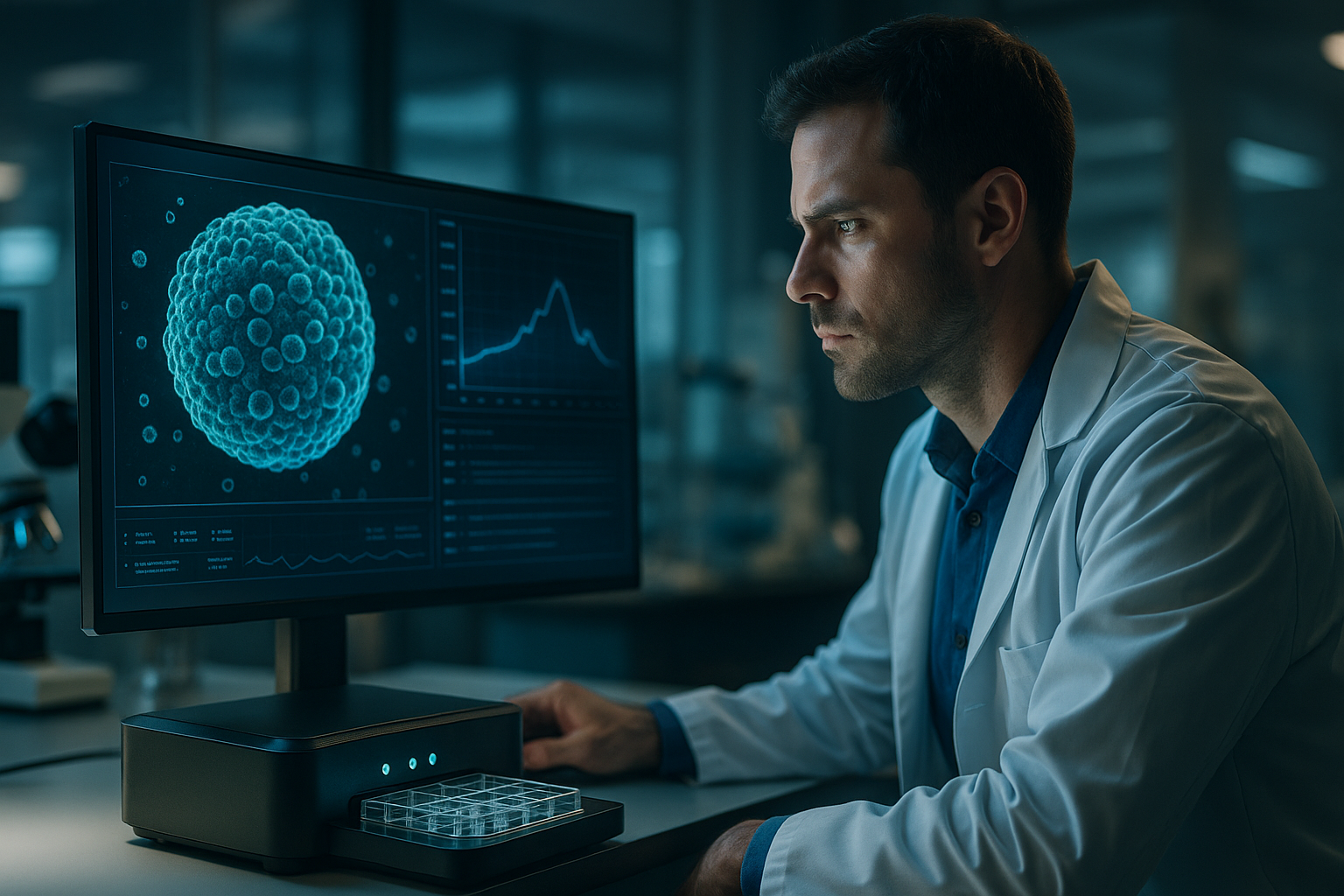
The zenCELL owl is an exemplary model of how EIS technology can integrate with artificial intelligence to revolutionize cell monitoring. By providing high-precision, real-time data via a user-friendly interface, it supports researchers in maintaining optimal cell culture conditions. Its advanced algorithms can analyze complex data patterns, predicting potential deviations and suggesting corrective actions, thus ensuring the highest data integrity and experimental reproducibility.
- Its use of AI-driven insights helps predict experimental outcomes and anomalies before they occur.
- Easy integration with existing lab infrastructure makes it a viable option for labs seeking to upgrade their capabilities efficiently.
Overcoming Challenges with EIS Implementation
Strategies for Successful Adoption
Implementing EIS technology in lab settings involves overcoming both technical and operational challenges. One primary concern is staff training; ensuring that all laboratory personnel are adept at utilizing new systems is crucial for successful adoption. Additionally, calibrating EIS equipment to match specific research needs can be demanding without adequate guidance from manufacturers or experienced technologists.
- Develop comprehensive training programs that include hands-on sessions and expert-led workshops.
- Partner with manufacturers to provide ongoing support and updates on technological advancements.
Case Studies: Successful EIS Integration
Real-World Examples of Impactful Use
Several biotechnological and pharmaceutical companies have successfully integrated EIS into their research pipelines, achieving remarkable results in data accuracy and workflow efficiency. For example, a leading pharma company utilized EIS to streamline their drug toxicity testing processes, which reduced assay times by 30% while improving data reliability. Another biotech firm employed EIS for cancer research, gaining predictive insights into tumor cell dynamics that facilitated more effective treatment protocols.
- These case studies illustrate how EIS can be a critical enabler of cutting-edge research and operational efficiencies.
- Critical to success is customizing the EIS system to the unique requirements of the research or diagnostic task.
Next, we’ll wrap up with key takeaways, metrics, and a powerful conclusion.
„`
„`html
Future Trends in EIS Development
Emerging Technologies and EIS
The future of Electrochemical Impedance Spectroscopy (EIS) is brimming with the potential for further technological advancements and novel applications. The ongoing development of nanoscale materials and devices is set to revolutionize how EIS systems are constructed and function, enhancing their sensitivity and application range. Furthermore, the continued evolution in computational power and data analytics will undoubtedly unlock even more sophisticated capabilities within EIS technologies, allowing for deeper insights and more targeted applications in a variety of scientific domains.
- The integration of nanotechnology with EIS could lead to breakthroughs in detecting biochemical changes at unprecedented scales.
- Growing computational capacities will enhance real-time data processing, offering dynamic adjustments to experimental parameters.
Sustainability and EIS Systems
Environmentally Conscious Innovations
As the global emphasis on sustainability intensifies, EIS technology is poised to play a significant role in creating environmentally friendly laboratory environments. The design of EIS systems increasingly incorporates sustainable materials and energy-efficient technologies. Moreover, EIS’s ability to optimize experimental processes can reduce resource consumption and waste production, thus aligning with broader sustainability goals in scientific research.
- Adopting eco-friendly materials in sensor design minimizes environmental footprint without compromising performance.
- EIS systems can support sustainable practices by optimizing resource use and minimizing experimental redundancies.
The Role of Collaboration in Advancing EIS
Building Bridges Across Disciplines
The advancement of Electrochemical Impedance Spectroscopy is not confined to technological innovations alone; it also hinges on fostering interdisciplinary collaborations. By bridging the gap between engineers, biologists, and data scientists, organizations can propel EIS technology into new realms of discovery. Collaborative efforts not only enhance the functionality and application of EIS but also contribute to the burgeoning fields of personalized medicine and precision healthcare.
- Joint ventures with tech firms can facilitate the development of customized EIS solutions targeted at specific research needs.
- Cross-disciplinary projects can expedite the translation of EIS innovations from lab to clinical settings.
Conclusion
The evolution of electrochemical impedance spectroscopy is a testament to the dynamic interplay between technological advancements and scientific inquiry. Over the course of this article, we’ve explored the transformative nature of EIS technology across various domains in cell analysis, highlighting its capacity to integrate with artificial intelligence, enhance automation, and mesh seamlessly into existing laboratory workflows. Significant strides have been made in sensor technology, data processing, and the incorporation of AI, propelling EIS to the forefront of innovative research techniques.
The applications of EIS in practical settings—be it in drug development, diagnostics, or real-time cellular monitoring—underscore its pivotal role in contemporary science. The ability of EIS to provide continuous, non-invasive insight into cellular processes enables more accurate research outcomes and informed decision-making in both academia and industry. As we look to the future, the integration of EIS with emerging technologies such as nanotechnology and enhanced data analytics promises to continue reimagining the possibilities of this powerful tool.
At the heart of EIS’s impact is its potential to drive sustainability and collaborative innovation, reshaping research environments into ecosystems of efficiency and creativity. By adopting eco-conscious designs and fostering interdisciplinary partnerships, the scientific community can harness the full potential of EIS to contribute not only to scientific advancement but also to the development of sustainable, impactful research methods.
The journey of embracing and expanding upon EIS technology is one of continuous exploration and adaptation. As researchers, developers, and visionaries, it is imperative that we keep the momentum going, seeking out new opportunities for EIS applications. Together, we can unlock the mysteries of biology with greater precision and push the boundaries of what is scientifically achievable.
Let us champion this transformative journey and inspire a global network of innovators to redefine EIS’s role in cell analysis—one discovery at a time.
„`
 German
  English
Schreibe einen Kommentar