
„`html
Toxicity Screening with Impedance: A Modern Approach to Cell Culture Research
In the evolving landscape of cell culture research, understanding the nuances of toxicity screening is crucial for advancing both preclinical and clinical studies. Toxicity screening with impedance presents a novel and sophisticated method to assess cellular responses to various compounds, offering significant improvements over traditional methodologies. This article will delve into the intricacies of impedance-based toxicity screening and its pivotal role in modern research.
Challenges in Traditional Toxicity Screening
Traditional toxicity screening methods, such as high-throughput screenings (HTS) and biochemical assays, have been instrumental in early drug discovery phases. However, they are fraught with limitations that impede accuracy and efficiency. These methods often require a large number of cells, are time-consuming, and can lead to variability across experiments due to manual handling.
- Lack of sensitivity in detecting subtle toxicant effects.
- High resource consumption in terms of reagents and cell lines.
- Limited ability to monitor real-time cellular changes.
Despite these limitations, the necessity for reliable toxicity screening remains paramount in the pharmaceutical and biotechnology industries. Hence, exploring innovative solutions is essential.
Technological Advances in Impedance-based Screening
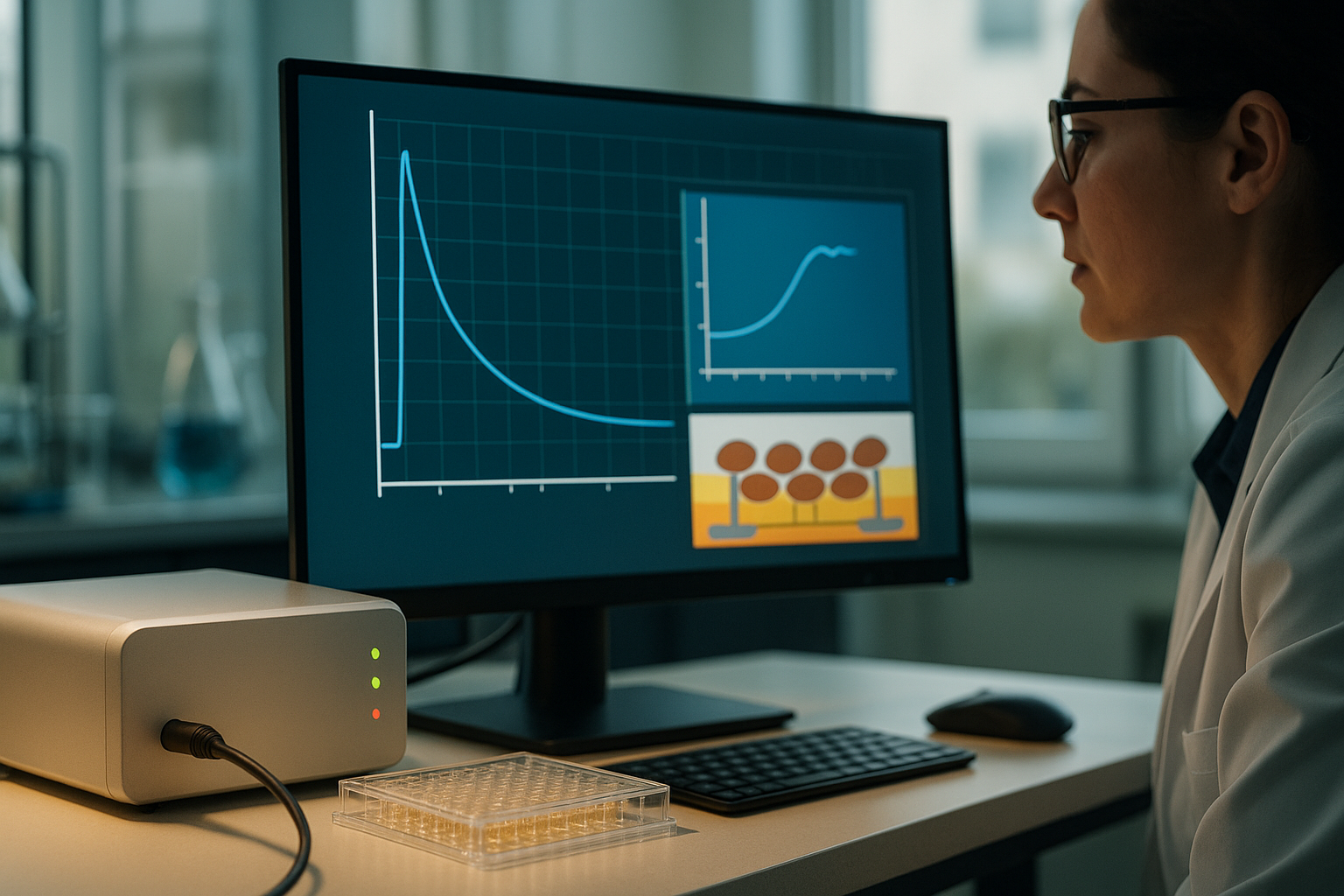
Impedance-based screening represents a breakthrough in toxicity detection, leveraging electrical impedance to monitor cellular changes in real-time. This technology capitalizes on the dielectric properties of cell membranes to provide continuous and dynamic insights into cell behavior when exposed to test compounds.
Key advantages include:
- Non-invasive and label-free monitoring of live cells.
- Real-time analysis of cellular morphology and adhesion.
- Enhanced sensitivity to detect early and subtle toxic responses.
These advancements not only enhance analytical precision but also streamline workflows in toxicity assays by facilitating automation and reducing subjective assessment errors.
Practical Implications and Workflow Optimization
The integration of impedance-based technologies, such as the zenCELL owl, into standard laboratory practices has revolutionized workflow efficiency. Specifically, their compatibility with incubators allows for seamless, uninterrupted monitoring of cell cultures under optimal conditions.
Incorporating Live-Cell Imaging
Live-cell imaging, combined with impedance technology, provides a comprehensive overview of cellular processes. It allows researchers to track phenomena such as cell proliferation, migration, and apoptosis with high precision, directly correlating electrical impedance changes with real-time cellular events.
- Improves data accuracy by correlating visual and electrical data.
- Minimizes risk of culture contamination by reducing manual handling.
Enhancing Reproducibility and Data Quality
One of the primary benefits of using impedance in toxicity screening is its ability to improve reproducibility and reliability of results. Continuous data monitoring under controlled conditions ensures consistency across experiments, a critical factor for validation in regulated production environments such as cGMP and GMP.
Reducing Variability
The continuous nature of impedance measurements reduces experimental variability by mitigating manual intervention and error. This aligns with industry standards demanding stringent quality control and precision in data acquisition.
- Ensures compliance with industry regulations.
- Facilitates robust quality management systems.
Continue reading to explore more advanced insights and strategies.
„`
„`html
Streamlining High-Throughput Screening with Impedance-Based Methods
Scalability and Efficiency in Toxicity Testing
Impedance-based toxicity screening methods have redefined high-throughput screening (HTS) by providing a scalable and efficient approach that aligns with modern research demands. Unlike traditional techniques, impedance measurements facilitate real-time monitoring across multiple wells simultaneously, significantly increasing the throughput of experiments.
- Automated systems like the xCelligence RTCA can handle hundreds of samples in parallel, optimizing time and resources.
Impedance platforms offer seamless integration with robotic systems, reducing manual oversight while maintaining high throughput, which is particularly beneficial for pharmaceutical companies conducting large-scale drug screenings.
Exploring Dose-Response Relationships with Precision
Quantitative Analysis of Toxicological Profiles
Understanding dose-response relationships is crucial for determining the efficacy and safety margins of pharmaceutical compounds. Impedance-based systems excel in providing quantitative and precise data at various concentrations over time. This enables researchers to construct detailed toxicological profiles and optimize drug formulations.
- Facilitates accurate determination of IC50 values, critical for drug development.
Real-world applications include assessing cardiac toxicity in cardiomyocytes or parsing out compound efficacy in oncology models, allowing for informed, data-driven decisions during drug advancement stages.
Optimizing Experimental Design with Integrated Technologies
Combining Impedance and Sensors for Holistic Insights
Incorporating additional sensors alongside impedance technologies can provide a multi-faceted approach to toxicity screening. Optical sensors can measure parameters like pH and dissolved oxygen, enriching the dataset and offering holistic insights into cell health and responses.
- Combines biochemical readouts with physical impedance data for a comprehensive analysis of cellular states.
These integrated systems empower researchers to optimize experimental design by correlating biological responses with measurable environmental changes, enhancing the quality of the derived conclusions.
Case Study: Impedance-Based Detection of Cardiotoxicity
Identifying Subtle Cardiac Effects
Cardiotoxicity remains a significant challenge in drug development, necessitating precision in detecting subtle cardiac dysfunctions. A case study leveraging impedance technology demonstrated its efficacy in recognizing minute changes in cardiomyocyte contraction and morphology following drug exposure.
- Proves invaluable in preclinical studies, avoiding costly late-stage drug development failures.
In this study, impedance measurements provided early indicators of adverse cardiac effects, streamlining the candidate selection process and refining screening protocols to prevent future liabilities.
Integrating Impedance Data with Machine Learning
Enhanced Predictive Analytics in Toxicity Forecasting
Machine learning models can seamlessly leverage impedance-based data, advancing predictive analytics in toxicity forecasting. By training algorithms on impedance datasets, researchers can develop predictive models to anticipate cellular responses to novel compounds.
- Offers predictive clarity on long-term cellular outcomes, facilitating early intervention strategies.
For example, using impedance data, a machine learning framework could predict hepatotoxicity, informing safer drug design and better therapeutic indices.
Driving Innovations with Collaborative Research Efforts
Open-Source Platforms and Shared Databases
Collaboration within the scientific community can drive innovations in impedance-based toxicity screening. Open-source platforms and shared databases enable researchers worldwide to contribute data, refining analytical methods and strengthening result comparability.
- Fosters a collaborative environment for sharing best practices and standardizing protocols.
Such cooperative efforts are vital for aligning research objectives across institutions, accelerating discoveries in toxicity screening applications.
Impacts on Regulatory Standards and Compliance
Meeting Industry Demands with Advanced Technologies
The adoption of impedance-based screening technologies aligns with evolving regulatory standards that demand precision and reliability in toxicity assessment. By providing robust, reproducible data, these systems support compliance with stringent industry guidelines.
- Ensures alignment with FDA and EMA regulatory requirements for drug safety evaluations.
As regulatory landscapes continue to evolve, impedance technologies offer a forward-compatible solution, ensuring continued operational compliance and market readiness.
Next, we’ll wrap up with key takeaways, metrics, and a powerful conclusion.
„`
„`html
Expanding Applications in Adjacent Fields
Beyond Pharmaceutical Testing
The scope of impedance-based toxicity screening extends beyond pharmaceutical applications, potentially revolutionizing other fields such as environmental monitoring and food safety. These systems can detect toxic substances in water or food products, ensuring public health and safety at multiple levels.
- Enables the fast screening of pollutants or contaminants in diverse matrices.
By adapting these technologies, industries can enhance their ability to comply with environmental regulations and ensure safer consumer products, highlighting the versatile applicability of impedance methods.
Challenges and Future Directions
Addressing Limitations to Foster Innovation
Despite its many strengths, impedance-based screening is not without challenges. One such challenge is the need for standardization across different technology platforms to ensure data consistency and accuracy. However, continuous advancements are being made to address these hurdles.
- Efforts are underway to develop universally accepted standards and protocols.
Future directions include enhancing data integration capabilities with other -omics technologies and further refining machine learning models to predict toxicological outcomes more accurately, creating a more comprehensive framework for toxicity assessment.
Embracing Impedance Technology for Future Research
Seamless Integration into Research Workflows
Impedance technology is increasingly being viewed as an intrinsic component of modern research workflows. Its integration allows for a more streamlined approach to toxicity screening and supports a broader range of experimental designs.
- Facilitates a cohesive, interdisciplinary approach to understanding complex biological interactions.
Researchers are empowered to harness the full potential of these technologies, paving the way for innovative solutions to contemporary challenges in drug development and beyond.
Conclusion
As we draw the final threads of discussion together, it’s clear that impedance-based toxicity screening has carved a significant niche in scientific research and development. Through its scalable, efficient, and precise methodologies, it offers a transformative approach to traditional high-throughput screening, bridging gaps between initial discoveries and final market launch. By seamlessly integrating with automated systems and adapting to colossal data analytics via machine learning, it provides researchers with a robust toolkit designed for precision and foresight.
The widespread applications across pharmaceuticals, environmental health, and even food safety underscore its value. Impedance technologies are not only refining toxicological profiles and dose-response insights but also widening the horizon for novel therapeutic strategies by aiding in the early detection of potential toxicities. Furthermore, the coherent integration of additional sensors and cross-field collaboration has been pivotal in enhancing data richness and interpretability, fostering a collaborative environment where shared knowledge breeds innovation.
As regulatory bodies increasingly lean towards advanced technologies, impedance methodologies assure stakeholders of compliance and reliability, fortified by international standards. For the scientific community, it is an invitation to embrace open-source contributions, leveraging collective intelligence to refine methodologies and unify efforts towards standardization, ensuring the comparability and cohesiveness of research findings worldwide.
In the face of evolving scientific landscapes, the quest for improved safety and efficacy in therapeutic development is unrelenting. Impedance-based screening stands as a beacon of advancement—a testament to the collaborative spirit and relentless pursuit of excellence in the scientific domain. As we steer into a future replete with discoveries, let us harness these insights and capabilities, employing them not just to innovate but to inspire a new era of groundbreaking research advancements. Together, we move towards a horizon where technology and science unite seamlessly, crafting safer, more effective solutions for humanity’s greatest challenges.
Engage actively with these technologies—join the conversation; collaborate, innovate, and redefine what’s possible. The future of toxicity screening is here, and it invites you to be part of its unfolding story.
„`
 German
  English
Schreibe einen Kommentar