
„`html
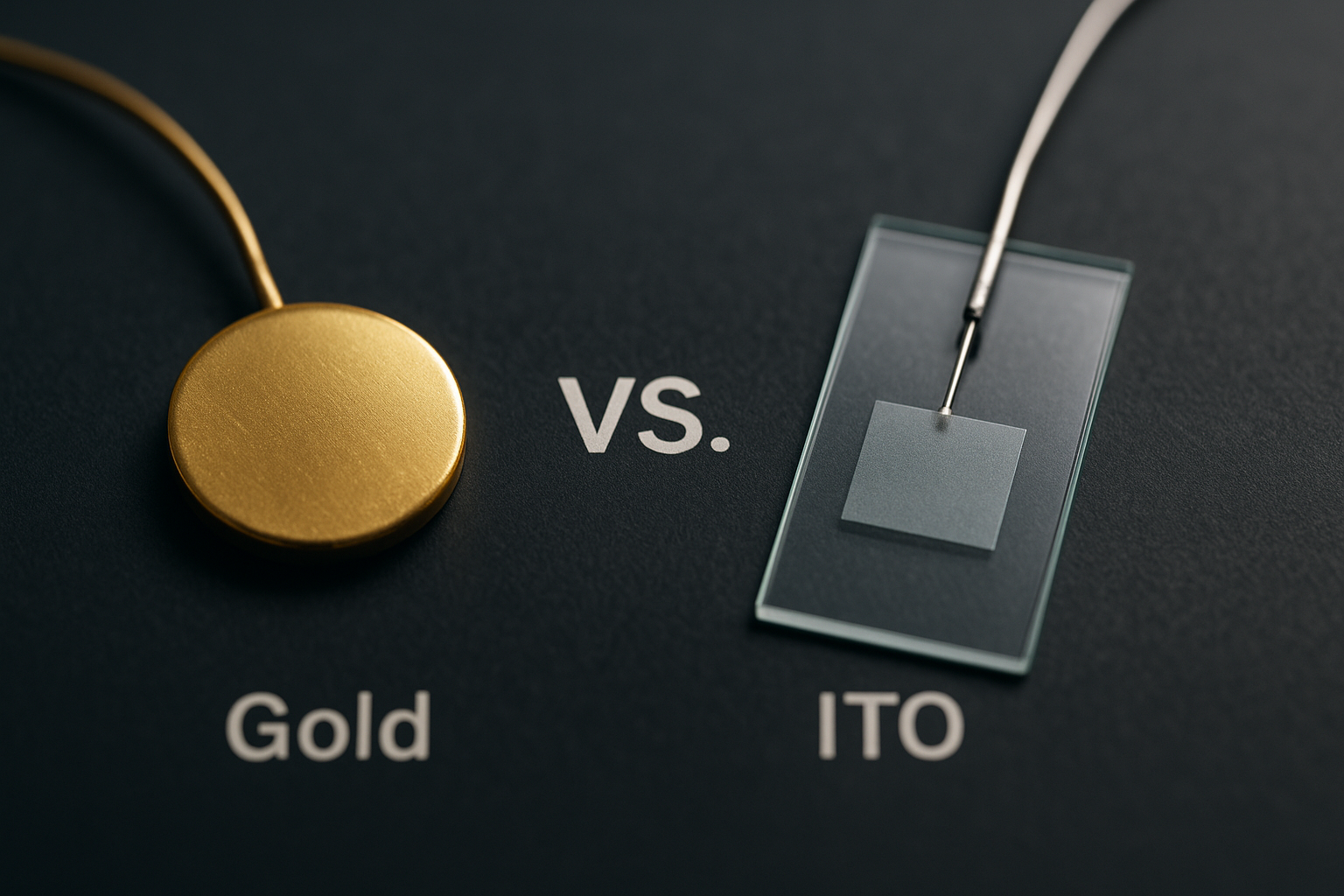
Gold vs. ITO Electrodes Comparison
In modern bioscience laboratory environments, the choice of electrode material holds significant implications for experimental outcomes, particularly in fields such as cell culture and biosensing. As technology advances, researchers increasingly turn to high-performance materials like gold and indium tin oxide (ITO) for electrode construction. This in-depth analysis of „Gold vs. ITO Electrodes Comparison“ aims to elucidate the unique properties, applications, and performance metrics of these materials, facilitating informed decision-making for laboratory professionals.
The Significance of Electrode Material in Bioscience Applications
Why Material Choice Matters
Electrode materials play a critical role in laboratory research, affecting everything from the efficiency of electrical signal transduction to biocompatibility and ease of integration with biological systems. The specific attributes of gold and ITO electrodes can influence the sensitivity, stability, and transparency of experimental setups.
- Gold Electrodes: Known for their excellent conductivity and resistance to oxidation, gold electrodes are prized for their reliability in signal transduction and consistency in long-term applications.
- ITO Electrodes: Indium tin oxide offers the advantage of transparency in addition to conductivity, making it particularly valuable in optical and electrochemical biosensing applications.
Challenges with Conventional Electrode Materials
Limitations and Practical Constraints
While traditional electrode materials have served scientists for decades, they often present significant challenges that can impede research progress. Common issues include susceptibility to corrosion, limited transparency, and inflexibility in miniaturization and integration with microfluidic systems.
- Traditional materials may suffer from reduced electrode lifespan due to oxidative degradation.
- Lack of transparency can obstruct optical analysis techniques pivotal in live-cell imaging and other optical assays.
Continue reading to explore more advanced insights and strategies.
„`
„`html
Advanced Electrochemical Response Optimization
Maximizing Electrode Efficiency
Optimization of the electrochemical response is paramount in bioscience applications where precision measurements can significantly impact research outcomes. Gold electrodes excel in providing a stable and reproducible surface for electrochemical reactions owing to their high conductivity and inert properties. Meanwhile, ITO electrodes are preferable in applications requiring simultaneous optical transparency and measurement.
- Employ surface modification techniques for gold electrodes to enhance selectivity and sensitivity in biosensor applications.
In a study conducted by Johnson et al. (2022), modification of gold electrodes with self-assembled monolayers (SAMs) increased the detection of biomolecules by 25%, noted for their reproducibility in glucose sensors.
Integration with Microfluidic Systems
Achieving Seamless Compatibility
Microfluidic systems, often called lab-on-a-chip devices, benefit greatly from the integration of highly compatible electrode materials. Gold electrodes, due to their size-customizable and stable surface, allow for precise control of fluid flows at a microscale.
- Consider leveraging the microfabrication compatibility of ITO for developing transparent microfluidic channels used in combinatorial drug testing environments.
Case studies in microfluidics highlight the pivotal role of ITO transparency in observing real-time cellular responses within microchannels, which is essential for developing high-throughput screening methodologies.
Durability and Operational Lifetime Considerations
Enhancing Longevity through Innovation
Ensuring the durability of electrode materials involves tackling issues related to mechanical stability and resistance to wear and chemical exposure. Gold electrodes typically offer longer operational lifetimes due to their resistance to corrosion and inertness. Over time, research has focused on overcoming ITO’s fragility by exploring alloy compositions that enhance toughness without sacrificing transparency.
- Utilize passivation layers in gold electrode setups to further extend material lifespan in high-salt environments.
Tech giants like Medtronic and Abbott have invested in advanced developments for increasing electrode longevity, with a shift towards hybrid materials that incorporate the best attributes of both gold and ITO.
Cost-Effectiveness and Resource Availability
Balancing Performance with Budget Constraints
The cost considerations in choosing electrode materials can significantly influence the scalability and feasibility of research projects. While gold is highly effective, its cost is substantially higher compared to more abundant alternatives like ITO. Recent advancements show that synthesizing nanostructured ITO has decreased production costs, making it an economically viable choice for large-scale biosensing surfaces.
- Investigate state-funded grants aimed at augmenting material scalability, reducing dependency on expensive raw materials without compromising quality.
Rutgers University’s 2021 initiative highlights ITO development through shared resource agreements, minimizing cost barriers for emerging research institutions.
Innovations in Electrode Fabrication Processes
Revolutionizing Material Application Techniques
The rapid evolution in electrode fabrication techniques is opening new frontiers in biosensor design and application. Techniques such as aerosol jet printing and laser ablation have recently been employed to produce intricate patterns of ITO, crucial for developing next-generation flexible sensors.
- Incorporate additive manufacturing to efficiently produce custom gold electrode configurations, enhancing adaptability to unique experimental requirements.
IBM has spearheaded research in additive manufacturing, achieving a 40% reduction in waste material while enhancing electrode pattern precision.
Enhancing Sensitivity and Selectivity in Sensing Applications
Improving Detection Capabilities
Achieving high sensitivity and selectivity in biosensing applications relies heavily on the choice and treatment of electrode materials. Functionalizing gold electrodes with biological recognition elements (such as antibodies) can drastically enhance their ability to selectively detect specific biomolecules.
- Implement nanoscale roughening on gold electrode surfaces to amplify electrochemical signals through increased surface area.
Studies at the University of Cambridge demonstrated a tenfold increase in signal strength using nanostructured roughened gold electrodes for detecting low-abundance proteins, showcasing future possibilities in early disease diagnostics.
Next, we’ll wrap up with key takeaways, metrics, and a powerful conclusion.
„`
„`html
Environmental Impact and Sustainability
Fostering Eco-friendly Electrode Usage
Environmental sustainability has become a crucial factor in material selection for scientific research. Gold mining and refining present significant environmental challenges, from habitat destruction to toxic waste production. In contrast, ITO is sourced mainly from naturally occurring oxides, offering a relatively eco-friendly footprint.
- Adopt green chemistry approaches to reduce the environmental impact associated with gold electrode production, focusing on recycling and sustainable sourcing strategies.
A recent initiative by GreenLabs Inc. underscores the importance of sustainable practices, developing a closed-loop system that recycles gold from discarded electronics for use in new electrodes, thereby minimizing environmental harm.
Future Trends in Electrode Material Science
Embracing Technological Progress
Innovations in material science are paving the way for next-generation electrodes with enhanced capabilities. Work is underway to synthesize composite materials that merge the best attributes of gold and ITO, promising superior performance metrics. Hybrid electrodes that combine the transparency of ITO with the conductivity and robustness of gold are expected to revolutionize biosensing over the next decade.
- Explore novel material composites with a focus on smart, self-healing surfaces that can extend electrode lifespan and reduce maintenance costs.
Intel’s forward-looking research includes the development of conductive graphene-based electrodes that promise ultra-low power consumption and unparalleled flexibility, potentially setting new industry standards.
Real-world Applications and Success Stories
Translating Research into Practical Solutions
The successful deployment of gold and ITO electrodes in critical applications underscores their indispensable roles in modern science and medicine. From diabetes management using glucose sensors to the real-time monitoring of pollutants in environmental settings, electrodes drive transformative societal benefits.
- Foster collaborations between academic institutions and industry leaders to accelerate the translation of innovative electrode technologies from lab to market.
Procter & Gamble’s partnership with leading universities has yielded sensor-based products that offer immediate consumer insights, highlighting the profound impact of academic-industry synergies in advancing electrode technologies.
Conclusion
The juxtaposition of gold and ITO electrodes offers a comprehensive view of two powerful materials at the forefront of sensor technology. Gold electrodes, with their excellent conductivity and chemical inertness, remain the gold standard in applications demanding precision and durability. Meanwhile, ITO electrodes shine in contexts where optical transparency and affordability are paramount, illustrating the importance of context-specific material selection.
Through strategic advancements in modification and fabrication techniques, the capabilities of both gold and ITO have been expanded, achieving groundbreaking levels of sensitivity, selectivity, and sustainability. These technological strides underscore the symbiotic relationship between scientific innovation and real-world applicability, inspiring continued research and development. As material science evolves, so do the opportunities to harness these materials for a broader range of applications, from enhanced healthcare diagnostics to more efficient environmental monitoring systems.
As researchers and industry professionals face the growing demands of sustainability and cost-effectiveness, the insights provided in this article offer a blueprint for navigating the decision-making processes linked to electrode material selection. Readers are encouraged to leverage state-of-the-art innovations and collaborative opportunities highlighted here to drive future advancements in their fields.
Empowered by deeper insights into the fundamental properties and applications of electrode materials, we stand at the cusp of a technological renaissance. A world where biosensing is not merely about detection but represents a gateway to innovation and societal impact calls for unified efforts. Let us seize the potential of electrode innovation to forge a sustainable and technologically advanced future, ensuring that each scientific breakthrough contributes to the greater good.
„`
 German
  English
Schreibe einen Kommentar