
„`html
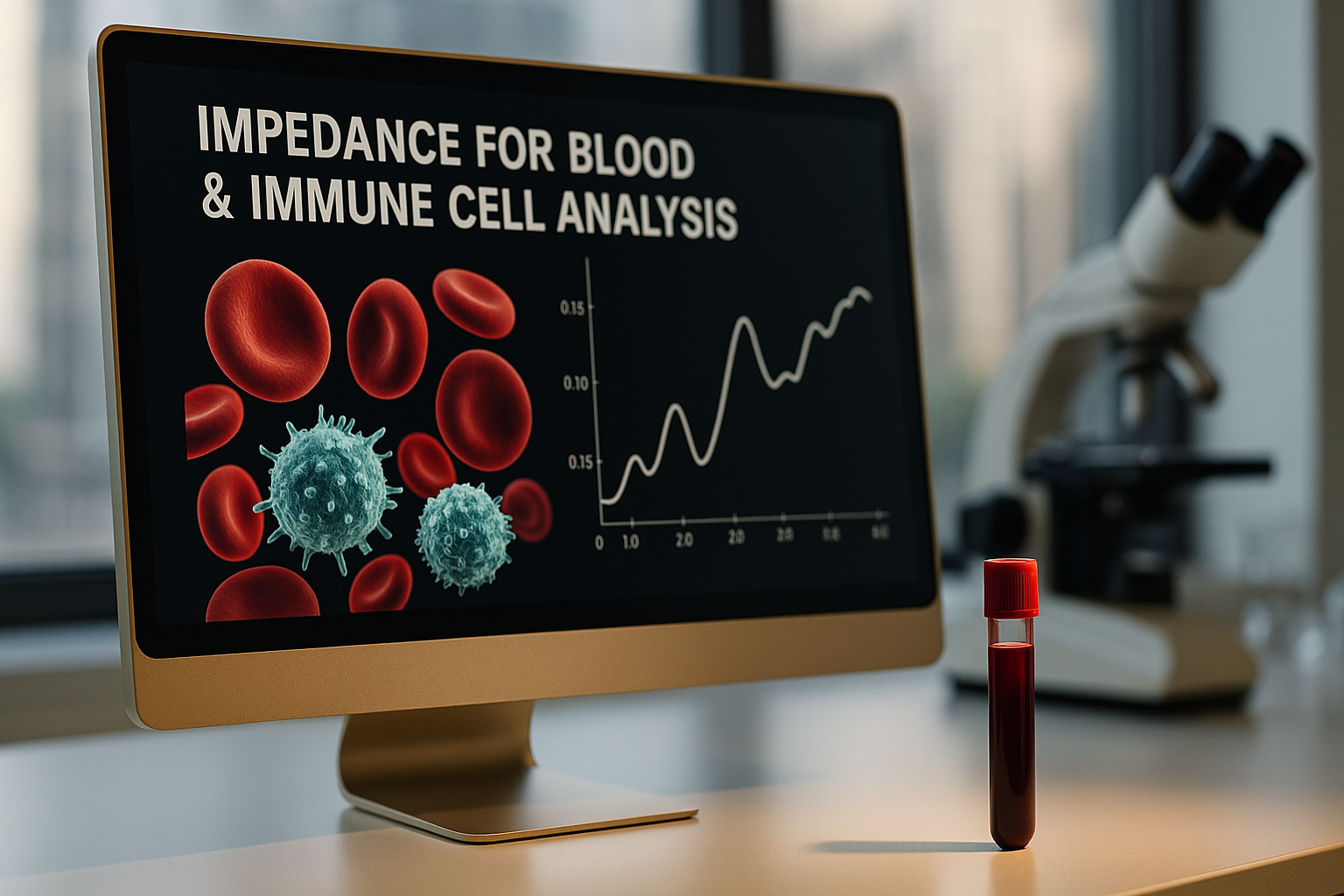
Impedance for Blood & Immune Cell Analysis
In the realm of modern hematology and immunology, techniques for assessing blood and immune cells have become increasingly refined. One method gaining traction is impedance analysis, a technique that offers distinct advantages for evaluating cellular characteristics and behaviors. With the rising demand for precise, efficient, and automated cell analysis in research and clinical laboratories, understanding impedance is critically relevant. This article delves into the principles of impedance for blood and immune cell analysis, its technological developments, and real-world applications.
The Relevance of Impedance in Cell Analysis
Understanding Basic Principles
Impedance analysis leverages electrical measurements to infer the physical and biological properties of cells. By applying an alternating electrical current, it is possible to determine the complex resistance—called impedance—of biological samples. This resistance can provide insights into cell size, volume, viability, and differentiation state, all without the need for extensive sample preparation or labeling.
- Electrical impedance correlates with cell morphology and membrane integrity.
- Allows real-time monitoring of cell populations.
- Non-invasive and label-free, preserving cell integrity.
Challenges in Traditional Cell Analysis Techniques
Limitations of Flow Cytometry and Microscopy
Flow cytometry and microscopy have been staples in cell analysis for decades. However, these methods come with inherent challenges. Flow cytometry requires fluorescent labeling and significant sample processing, which can interfere with cell functions. On the other hand, microscopy, while versatile, can be time-consuming and limit throughput due to manual operation requirements.
- Fluorescent probes may alter cell behavior during long-term studies.
- Microscopy lacks automation and scalability in high-throughput settings.
- Sample preparation can introduce artifacts or damage cells.
Technological Advances in Impedance-Based Cell Analysis
Automation and High-Throughput Capabilities
Recent advancements have integrated impedance technology into automated platforms. These developments are primarily driven by the demand for multiplexing capabilities and the need for continuous monitoring of cell cultures. Notably, systems such as the zenCELL owl highlight the trend towards compact, incubator-compatible devices that facilitate real-time data collection, enhancing reproducibility and accuracy.
- Automated data acquisition reduces human error.
- Real-time analysis provides dynamic cellular profiles.
- Integration with incubators ensures optimal culture conditions.
Practical Applications in Immunology and Hematology
Use Cases for Impedance Analysis
Impedance for blood and immune cell analysis finds utility in various research and diagnostic applications. For instance, it can be used in migration assays, which are crucial for studying immune cell response. Additionally, impedance facilitates the monitoring of cellular proliferation and differentiation, vital for understanding stem cell therapies and cancer biology.
- Improves sensitivity and specificity of cell migration studies.
- Allows comprehensive analysis of proliferation without staining.
- Monitors real-time response to therapeutic agents.
Continue reading to explore more advanced insights and strategies.
„`
„`html
Enhanced Cellular Insights using Impedance Approaches
Technological Integration in Research Settings
Incorporating impedance measurement technologies in laboratory environments allows for enriched cellular insights without the limitations associated with traditional methods. For instance, laboratories have successfully utilized impedance to study cell cycles effectively, thereby gaining nuanced understanding in fields such as oncology and regenerative medicine. The non-invasive nature of impedance enables extended observation periods, critical for chronicling dynamic biological processes like tumor progression or stem cell maturation.
- Use impedance data to track cell cycle phases and anomalies.
- Address research questions beyond the scope of conventional techniques.
Advanced Characterization of Immune Responses
Precision Analysis in Immune Cell Behavior
The immune system’s complexity necessitates precise analytic tools. Impedance provides a strategic advantage in deciphering immune cell behavior by offering real-time insights into cellular interactions and responses. One illustrative application lies in evaluating the efficacy of immunotherapies, where impedance data can reveal how therapies modulate cellular properties like adhesion and migration, thereby aiding in optimizing therapeutic approaches.
- Employ impedance to refine immunotherapy strategies.
- Utilize impedance metrics to predict therapeutic outcomes.
Harnessing Impedance in Stem Cell Research
Exploration of Differentiation and Viability
Stem cells, with their potential to differentiate into various cell types, demand accurate and sensitive analysis techniques. Impedance technology is central to assessing stem cell viability and differentiation in real-time. By monitoring impedance changes, researchers can gauge differentiation stages and viability without destroying or altering the cells, crucial for applications in tissue engineering and regenerative therapies.
- Leverage impedance for non-destructive stem cell analysis.
- Integrate impedance data with biochemical assays for comprehensive insights.
Implementing Innovative Impedance Systems in Clinical Diagnostics
Streamlining Diagnostics with Automated Impedance Platforms
The clinical environment benefits from the precision and automation provided by advanced impedance systems. In diagnostics, these platforms streamline workflows by requiring minimal operator intervention while offering high-throughput analysis capacities. For example, advanced impedance-based systems facilitate rapid identification of sepsis by analyzing white blood cell counts and reactive responses, leading to faster treatment decisions.
- Integrate impedance systems to expedite diagnostic processes.
- Reduce diagnostic time with high-throughput data collection.
Impedance as a Tool for Customized Therapy Development
Tailoring Approaches to Individual Patient Needs
In the era of personalized medicine, impedance analysis serves as a pivotal tool for tailoring therapies to individual patient profiles. By examining the impedance signature of patient-derived cells, researchers can identify unique cellular characteristics that guide custom treatment plans. This approach is demonstrated in oncology, where patient-specific tumor cell responses to chemotherapy agents are monitored, enabling personalized therapeutic regimens.
- Use impedance data to craft patient-specific therapeutic approaches.
- Apply impedance analysis to enhance therapy precision and effectiveness.
Boosting Research Capabilities with Multiplexed Impedance Assays
Simultaneous Multi-Parameter Analysis for Comprehensive Studies
Multiplexed impedance assays have redefined research capabilities by allowing concurrent analysis of multiple cellular parameters. This ability enables comprehensive studies that delve into complex biological questions that require simultaneous consideration of variables such as cell health, morphology, and behavior. Such multifaceted approaches are crucial in complex fields like neurobiology, where simultaneous analysis of neuron activity and health can lead to deeper insights.
- Optimize research methodologies with multiplexed impedance assays.
- Enhance study depth by simultaneously analyzing diverse cellular signals.
Next, we’ll wrap up with key takeaways, metrics, and a powerful conclusion.
„`
„`html
Revolutionizing Drug Discovery with Impedance Screening
Accelerated Preclinical Testing through Novel Techniques
The drug discovery pipeline benefits immensely from the incorporation of impedance screening technologies. These systems expedite the preclinical testing phase by providing rapid, real-time data about cellular responses to potential pharmacological agents. By evaluating the effects on cell adhesion, viability, and morphology, impedance screening enables more efficient identification of effective compounds while minimizing reliance on traditional, time-consuming methods.
- Reduce drug discovery timelines with high-throughput impedance screening.
- Enhance data reliability and relevance in preclinical testing stages.
Enhancing Environmental and Toxicological Studies
Assessing Cellular Responses to Environmental Stressors
Impedance analysis also extends its utility to environmental and toxicological studies, offering a sensitive means to assess cellular responses to various stressors. By monitoring impedance shifts, researchers gain an insightful understanding of how environmental toxins and pollutants impact cell health and function, thus contributing to more informed public health and environmental policies.
- Utilize impedance for real-time toxicity assessments.
- Inform regulatory standards with detailed impedance data.
Future Directions for Impedance Technologies
Expanding Horizons in Multi-Disciplinary Research
As impedance technologies continue to evolve, their potential applications are expanding into new domains, such as bioinformatics and artificial intelligence integration. These advancements promise to refine data interpretation, optimize experimental design, and drive breakthroughs across multiple scientific fields. Such integration will likely lead to personal healthcare devices that provide ongoing, real-time health monitoring, highlighting the adaptability and future potential of impedance techniques.
- Integrate AI-driven analytics for enhanced impedance data interpretation.
- Explore personal healthcare applications with continuous monitoring capabilities.
Conclusion
The role of impedance technology in modern biological and clinical research cannot be overstated. Through leveraging its versatility, precision, and non-invasive nature, impedance has emerged as a cornerstone technique advancing fields ranging from oncology to environmental science. Its application in cellular analysis allows researchers to unravel complex biological processes in ways that traditional methods cannot match, providing deeper insights into disease mechanisms, treatment optimizations, and environmental impacts.
This article has highlighted the breadth of impedance technology applications, focusing on its capacity to enhance cellular insights, optimize therapeutic strategies, and streamline clinical diagnostics. The ability to analyze cell behavior in real-time, without altering the cellular environment, marks a significant leap forward in research methodology. Furthermore, the potential for personalized medicine and tailored therapeutic approaches afforded by impedance analysis underscores its relevance in today’s healthcare paradigm.
As we look to the future, the integration of impedance technologies with AI-driven analytics and other advanced platforms promises exponential growth in research capabilities and clinical applications. It is imperative for researchers and clinicians to embrace these innovations, harnessing technological advancements to fuel next-generation discoveries and improve patient outcomes. Let us collectively forge an era where science and technology empower us to address complex challenges with precision, insight, and innovative spirit.
„`
 German
  English
Schreibe einen Kommentar