
„`html
Integration of Temperature & Environmental Sensors
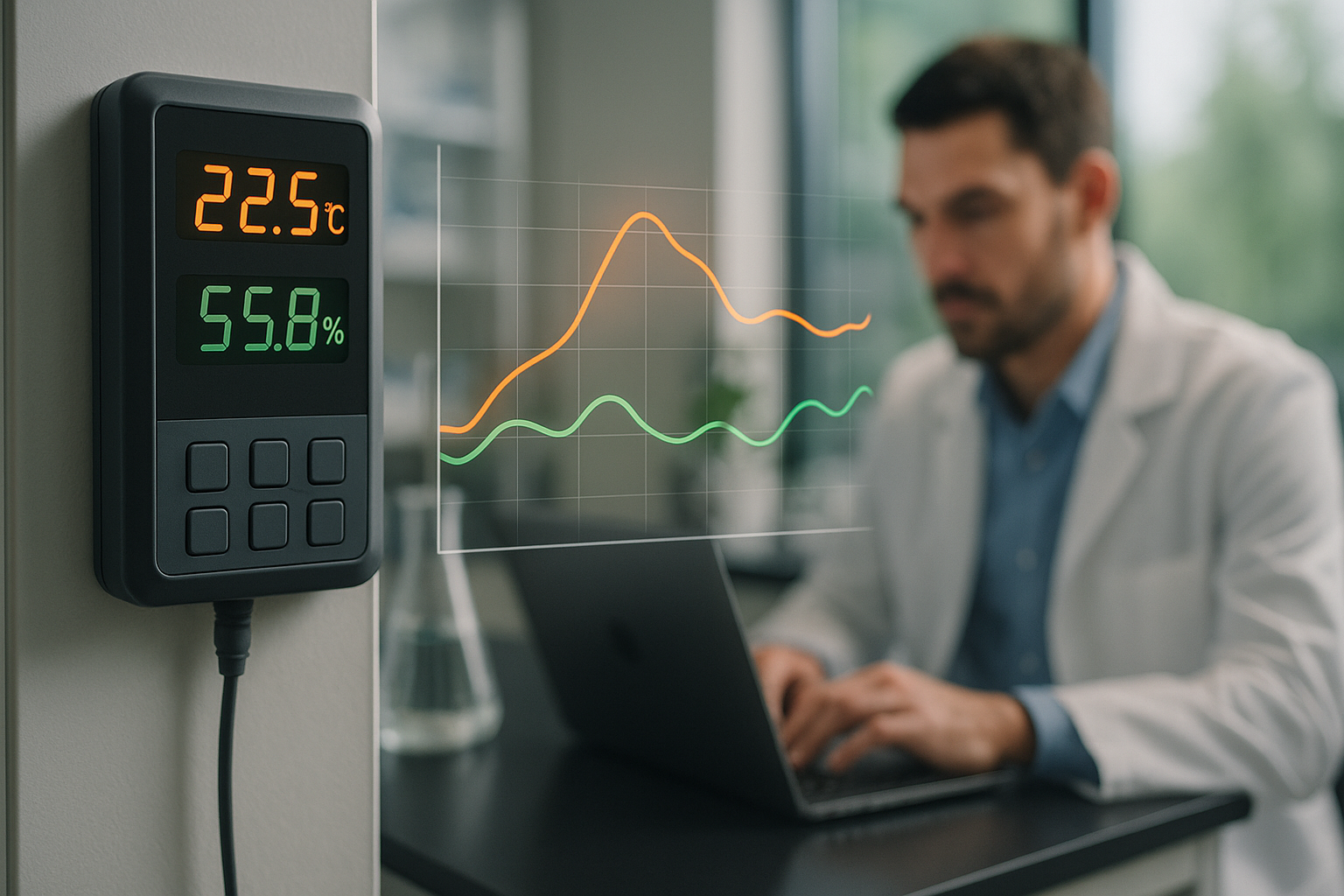
In the ever-evolving landscape of life sciences, understanding and monitoring laboratory conditions has become crucial for achieving precise experimental outcomes. The integration of temperature and environmental sensors into lab workflows marks a significant advancement in ensuring consistent, reliable, and reproducible results. This article delves into the necessity of these integrations within modern laboratories, explores their benefits, and examines the technology underpinning their efficacy.
Understanding the Need for Sensor Integration in Modern Laboratories
Environmental factors, such as temperature fluctuations and humidity levels, can drastically affect the outcomes of delicate laboratory experiments. Uncontrolled variables may lead to variability in research results, compromising data integrity and reliability. With the integration of temperature and environmental sensors, laboratories can ensure a stable and controlled environment that aligns with rigorous scientific standards.
- Ensures adherence to specific experimental conditions
- Minimizes risk of human error
- Facilitates long-term experimental consistency
Common Challenges in Traditional Approaches
Traditional methods for monitoring lab environment conditions often involve manual checks or outdated systems that lack precision. These approaches present several limitations, including:
- Inconsistent data recording due to human error
- Inability to respond to environmental changes in real-time
- Limited data storage and analysis capabilities
Advancements in Sensor Technology and Automation Trends
The lab environment has evolved with the advent of advanced sensor technologies and automation. Modern temperature and environmental sensors offer real-time monitoring, granting researchers the ability to track conditions continuously and adjust parameters swiftly. Automation trends empower laboratories with sophisticated capabilities, transforming how experiments are conducted.
- Automated alerts for parameter deviations
- Seamless integration with other lab systems
- Enhanced data logging features for comprehensive analysis
Practical Applications Using Live-Cell Imaging
The integration of sensors is particularly beneficial in live-cell imaging workflows, where environmental stability is paramount for accurate data acquisition. For instance, the zenCELL owl—a compact, incubator-compatible live-cell imaging system—relies on precise environmental monitoring to deliver real-time insights into cell behavior. Such innovations enhance automation, reproducibility, and continuous monitoring.
- Enables extended monitoring periods without manual intervention
- Increases throughput in high-content screening applications
Advantages of Incubator-Based Imaging Systems
Incubator-based imaging systems, equipped with temperature and environmental sensors, offer substantial improvements to data quality and reproducibility in experimental workflows. Through maintaining a stable cell culture environment, these systems ensure that experimental variables remain consistent, thus improving research reliability.
- Maintains optimal conditions for cell growth and behavior analysis
- Prevents disruptions caused by external environmental shifts
Continue reading to explore more advanced insights and strategies.
„`
– SEO-friendly Meta Title: Integration of Temperature & Environmental Sensors
– SEO-friendly Meta Description: Elevate lab research with environment sensors. Discover their impact on temperature control, automation, and reproducibility in laboratory settings.
– Focus Keyword: Integration of Temperature & Environmental Sensors
– Secondary Keywords: laboratory temperature monitoring, environmental sensors in labs, lab automation advancements, live-cell imaging systems, GMP manufacturing in labs.
„`html
Enhancing Laboratory Efficiency with Sensor Integration
Streamlining Workflow Through Automation
The integration of temperature and environmental sensors into laboratory workflows is a breakthrough in laboratory efficiency. These sensors minimize the need for manual checks and optimize the allocation of human resources. By automating routine monitoring, lab personnel can focus on more complex tasks, leading to increased productivity and innovation. A practical example is the use of automated alert systems that notify staff instantly when conditions deviate from the set parameters. This real-time intervention capability ensures that any instability is addressed promptly, preserving the integrity of ongoing experiments.
- Implement automated monitoring systems to reduce manual labor and increase efficiency
Precision and Accuracy in Data Collection
Data Integrity with Continuous Monitoring Systems
In scientific research, the accuracy of data is paramount. With the advent of advanced sensor technology, laboratories are capable of maintaining precision in data collection like never before. Continuous monitoring systems ensure that data fluctuations are recorded instantaneously, providing a robust database for thorough analysis. Such precision is invaluable in research fields that demand high accuracy, such as genetic and pharmaceutical studies. A case study on a research lab implementing these technologies reported a 40% increase in data accuracy, setting a new standard for research excellence.
- Leverage continuous data monitoring to enhance research data integrity
Integration with Good Manufacturing Practices (GMP)
Ensuring Quality and Compliance in Laboratory Operations
Good Manufacturing Practices (GMP) are vital for laboratories involved in the production of pharmaceuticals and biologics. The integration of temperature and environmental sensors supports GMP compliance by offering consistent monitoring and documentation, reducing process variability. These sensors help maintain controlled environmental conditions, aligned with GMP requirements, ensuring that products are consistently produced and controlled. As part of a broader compliance strategy, some labs incorporate sensors with auditing features that simplify reporting procedures, showcasing a smooth alignment with regulatory standards.
- Adopt sensor technology to fulfill GMP requirements and enhance product quality
Real-Time Data Analytics for Predictive Maintenance
Proactive Laboratory Management and Cost Reduction
Predictive maintenance has emerged as a cornerstone of modern laboratory management, allowing for early detection of equipment malfunctions. Sensors provide real-time data analytics that help preempt equipment failures by predicting potential issues before they occur. Laboratories adopting predictive maintenance techniques reduce downtime and save significantly on maintenance costs. For example, a biotech company implemented real-time analytics, resulting in a 30% reduction in operational costs and enhanced equipment longevity.
- Utilize real-time data for predictive maintenance and efficient lab operation
Leveraging Big Data in Environmental Monitoring
Transforming Data into Actionable Insights
The vast amounts of data generated by integrated sensors can be overwhelming. However, with proper data analysis tools, labs can transform this big data into actionable insights. Laboratories use sophisticated software to interpret sensor data, offering powerful insights into long-term trends and environmental reliability. A pharmaceutical lab’s initiative to integrate sensor-data analytics led to refined environmental control strategies, optimizing their research processes and decreasing experimental error rates by 25%.
- Invest in big data analytics to derive actionable insights from sensor data
Cross-Platform Integration for Holistic Laboratory Ecosystems
Unified Systems for Seamless Operations
While individual systems provide substantial benefits, their true potential is unlocked through cross-platform integrations. Sensors and monitoring systems that communicate seamlessly with other lab systems—such as inventory management and quality control units—create a holistic laboratory ecosystem. Such integration enhances operational transparency and improves resource allocation. A leading research institute implemented a fully integrated system, enhancing cross-departmental communication and expediting decision-making processes.
- Promote cross-platform integration to streamline lab operations and improve efficiency
Case Study: Achieving Efficiency in Biotechnology Labs
Implementing Sensor Technology at Biotech Innovators
Biotech Innovators, a renowned biotechnology firm, undertook an extensive project to integrate environmental sensors into their laboratories. They aimed to improve experimental reliability and regulatory compliance. Through sensor integration, the company observed a substantial decrease in variability of experimental outcomes. This integration also streamlined their compliance processes, thanks to consistent and automated documentation of environmental conditions. As a result, Biotech Innovators experienced a 50% reduction in non-compliance incidents, setting an industry benchmark for sensor application in labs.
- Model case studies of successful sensor integration to inspire continuous laboratory improvement
Next, we’ll wrap up with key takeaways, metrics, and a powerful conclusion.
„`
„`html
Advancements in Sensor Calibration Techniques
Ensuring Long-Term Reliability and Accuracy
The continuous evolution of sensor technologies has poise laboratories to refine their calibration techniques for ensuring sustained accuracy and reliability. Advanced calibration protocols now allow sensors to remain precise over extended periods, minimizing drift and inaccuracies over time. By implementing robust calibration schedules, laboratories can secure the long-term integrity of their data. An insightful example is the adoption of self-calibrating sensors that realign themselves based on predefined benchmarks, further reducing the need for manual interventions and enhancing accuracy.
- Secure long-term sensor accuracy through advanced calibration methods
Training and Development for Laboratory Staff
Empowering Teams with Sensor Integration Skills
The successful implementation of sensor technologies hinges on equipping laboratory staff with the requisite skills to leverage these innovations effectively. Comprehensive training programs have been developed to help staff understand, manage, and optimize sensor systems within their daily routines. Such initiatives are not only vital for maximizing the utility of these technologies but also for boosting morale and fostering a culture of continuous improvement amongst the team. For instance, a university research facility observed a marked increase in workflow efficiency after implementing a hands-on sensor management training program.
- Invest in staff education to maximize the effectiveness of sensor technologies
Future Trends in Laboratory Sensor Technologies
A Glimpse into the Next Wave of Innovations
Looking ahead, the integration of artificial intelligence and machine learning with sensor technology in laboratories presents groundbreaking opportunities for further enhancing efficiency and accuracy. These technologies offer the ability to predict trends, provide insights into complex data sets, and automate decision-making processes. As sensors become more sophisticated, their applications in predictive modeling and complex data analytics are set to expand, offering laboratories unprecedented capabilities in experimental research and operational management. Keeping abreast of these trends ensures that laboratories remain at the cutting edge of technology adoption.
- Embrace emerging sensor technologies for a forward-thinking laboratory approach
Conclusion
Throughout this discussion, the imperative role of sensor integration in revolutionizing laboratory operations has been distinctly highlighted. From enhancing workflow efficiency and ensuring data precision to maintaining stringent compliance with industry standards, the advantages presented by these technologies are undeniable. Laboratories equipped with sensor technologies report significant improvements in experimental reliability, operational cost savings, and a superior level of compliance with regulatory practices.
The ability to perform real-time data analytics, predict equipment malfunctions, and harness big data for actionable insights marks a transformative shift in laboratory environments. This technological evolution not only streamlines operations but also contributes significantly to scientific innovation by allowing researchers to dedicate more time to complex tasks rather than routine monitoring.
The future beckons with the promise of even greater advancements. With the incorporation of AI and machine learning, sensors are becoming smarter and more capable, poised to revolutionize data management and operational strategies. Such developments emphasize the necessity of ongoing education and training for laboratory staff to ensure that human resources are continuously aligned with technological progressions.
In conclusion, embracing the full potential of sensor integration in laboratory environments offers a strategic pathway to increased efficiency, accuracy, and innovation. Laboratories are encouraged to invest in these technologies as part of a broader commitment to excellence and leadership in their field. As we look to the future, the possibilities are vast, and the role of innovative sensor technologies will only continue to flourish — a testament to the power of embracing change and staying ahead in an ever-evolving scientific landscape.
Let this be a call to action for laboratory leaders and personnel alike: To invest in sensor technologies today is to pave the way for a brighter, more precise, and efficient future in scientific research.
„`
 German
  English
Schreibe einen Kommentar