
„`html
Impedance in Wound Healing Assays
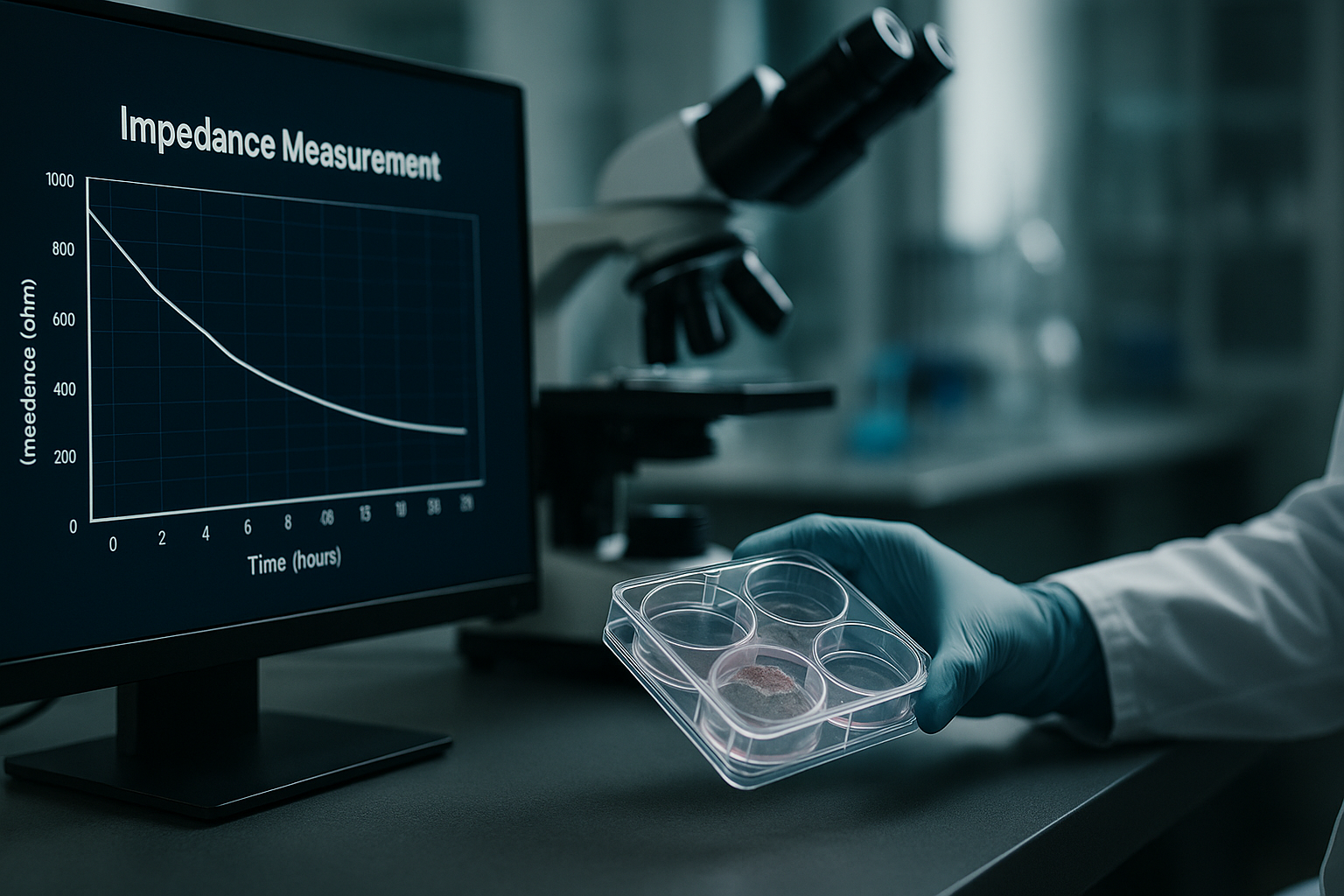
Wound healing assays are a cornerstone in the study of cellular behavior, particularly in understanding tissue regeneration and the mechanisms of disease progression. Traditional methods, while informative, often lag behind in terms of real-time analysis and precise monitoring of cellular activities. Impedance, as a non-invasive and label-free methodology, is gaining attention for its ability to enhance wound healing assays. This article delves into the scientific intricacies of impedance in wound healing assays, exploring its relevance, technical implementation, and advantages in modern laboratory environments.
Challenges in Traditional Wound Healing Approaches
Limitations of Conventional Methods
Traditional wound healing assays, such as the scratch assay, rely heavily on manual intervention and subjective interpretation. These methods face several challenges that can compromise data integrity and repeatability:
- Lack of standardized protocols leading to variable results.
- Manual measurement errors and observer bias.
- Inability to capture dynamic cellular changes in real-time.
- Complexity in analyzing data from stained samples.
These challenges necessitate innovative solutions that can offer more reliable and detailed insights into cellular behavior.
Impedance as a Technological Advancement
Understanding Impedance in Cellular Assays
Impedance-based methodologies provide a novel way to assess cellular activities by measuring the electrical impedance variations as cells interact with their environment. Here are key features that set impedance apart:
- Real-time continuous monitoring without the need for labels.
- Ability to detect minute changes in cell morphology and motility.
- Enhanced data reliability with high sensitivity and specificity.
These technological advances make impedance a powerful tool in wound healing assays, providing detailed insights into cell migration, proliferation, and differentiation.
Applied Workflows and Practical Benefits
Utilizing Live-Cell Imaging in Wound Healing
The integration of impedance measurements with live-cell imaging, such as those provided by systems like the zenCELL owl, enhances the precision of cellular assays. The zenCELL owl, by being incubator-compatible, facilitates uninterrupted, real-time cell monitoring in a controlled environment:
- Combines impedance data with high-resolution imaging for comprehensive analysis.
- Reduces variability by eliminating manual handling errors.
- Streamlines workflows through automated data acquisition and interpretation.
Live-cell imaging in conjunction with impedance offers an unprecedented view of dynamic cellular processes, thereby revolutionizing how wound healing assays are conducted.
Incubator-Based Imaging for Enhanced Reproducibility
Boosting Data Quality and Consistency
One of the significant advantages of using incubator-based imaging systems is the enhancement of reproducibility and data quality. Being able to monitor assays in their physiological conditions without disturbance allows for more precise control over experimental variables:
- Maintains optimal conditions, reducing stress-induced artifacts.
- Supports high-throughput screening with consistent results.
- Delivers robust data suitable for regulatory and clinical needs.
As a result, researchers can achieve a higher level of confidence in their findings, fostering more impactful science.
Real-World Applications and Future Prospects
Harnessing Impedance in Diverse Assays
Impedance-based wound healing assays are applicable in various research domains, including migration assays, organoid development, and proliferation studies. Their ability to perform high-throughput screening (HTS) makes them ideal for diagnostics and therapeutic research:
- Enables rapid assessment of drug effects on cell motility.
- Facilitates detailed study of cancer cell invasiveness.
- Supports innovation in tissue engineering and regenerative medicine.
Looking forward, impedance measurement will likely become a staple in laboratory workflows, driving forward the capabilities of biotech research and pharmaceutical innovation.
Continue reading to explore more advanced insights and strategies.
„`
„`html
Integrating Computational Modeling into Impedance Assays
Leveraging Algorithms for Enhanced Predictability
Computational modeling stands as a transformative ally in impedance-based wound healing assays. Harnessing algorithms allows researchers to simulate and predict cellular behaviors, yielding insights that are not readily apparent through direct observation. By integrating real-time impedance data, computational models can dynamically adapt to changing cellular environments, providing a predictive analytic layer.
- Utilize data-driven models to anticipate cellular responses to treatments.
For instance, machine learning algorithms can be trained to recognize patterns within impedance data that correlate with specific cellular activities, such as early signs of metastasis in cancer cells or rapid proliferation in response to growth factors. Such predictive modeling accelerates research timelines and improves the accuracy of therapeutic assessments.
Quality Control in Impedance-Based Assays
Standardizing Processes for Reliable Outcomes
Implementing stringent quality control measures is essential for maintaining the integrity of impedance-based assays. Standardization of protocols ensures that assays are reproducible and that data quality remains consistent across experiments. This includes detailing preparation procedures, calibration of equipment, and uniform data analysis techniques.
- Adopt a universal protocol framework to minimize experimental discrepancies.
For practical implementation, laboratories can develop Standard Operating Procedures (SOPs) that are regularly reviewed and updated. Moreover, leveraging software that facilitates real-time error detection and correction can significantly enhance the reliability of obtained data.
Maximizing Throughput with Automated Impedance Systems
Scaling Up Research with Efficiency
Automation in impedance-based assays represents a critical advancement for laboratories aiming to maximize throughput without sacrificing data accuracy. Automated systems can conduct multiple assays simultaneously, reducing manual labor and time investment while increasing the consistency of results.
- Invest in robotic platforms to oversee continuous assay operations.
An example of such automation is the use of plate readers capable of simultaneous impedance measurement across multiple samples. This high-throughput capability is particularly beneficial in drug screening environments where speed and precision are paramount. Researchers leveraging automation report enhanced productivity and a broadened scope of experimental designs.
Customizing Assays for Specific Applications
Tailoring Experimental Design to Fit Research Goals
The versatility of impedance assays allows customization to meet the specific needs of diverse research applications. Adjusting parameters such as frequency range and electrode configuration can optimize assays for particular cell types or conditions.
- Consult with experts to fine-tune assay conditions for best results.
For example, different frequency settings can enhance the sensitivity to cell adhesion properties or motility, aiding precise characterizations in cancer research compared to regenerative medicine. Researchers are encouraged to pilot various configurations and share methodologies, fostering a community-driven approach to continuous improvement in assay setups.
Leveraging Impedance Data for Regulatory Submissions
Aligning Research with Clinical and Regulatory Standards
Impedance data provides a robust evidential foundation for regulatory submissions, pivotal in the approval processes of new therapeutics and devices. The quantitative nature of impedance metrics aligns with stringent regulatory requirements, supporting detailed safety and efficacy evaluations.
- Align assay outputs with regulatory compliance to streamline approval pathways.
By embedding standardized data reporting systems, researchers can directly align their findings with the needs of bodies such as the FDA or EMA. This alignment not only facilitates smoother submission processes but also reinforces the credibility and acceptance of assays in clinical settings.
Enhancing Collaborative Research Through Data Sharing
Fostering a Collaborative Environment in Scientific Endeavors
Data sharing is integral to the advancement of science, particularly in highly specialized domains such as impedance-based assays. A culture of shared knowledge accelerates discovery and mitigates the risk of repetitive research efforts, ensuring resources are directed towards innovation.
- Create open-access repositories for impedance assay data.
Platforms such as Zenodo or dedicated assay databases can serve as venues for researchers to upload and access impedance datasets. This encourages transparency, replicability, and broadens the application of findings across various medical and scientific disciplines.
Exploring Future Impedance Technology Innovations
Anticipating Next-Generation Assay Developments
The field of impedance assay technology is continuously evolving, with new innovations on the horizon poised to further enhance research capabilities. Advancements such as integration with artificial intelligence and development of portable impedance devices are set to redefine accessibility and functionality.
- Stay informed about emerging technologies to maintain a leading edge in research.
AI-driven analytics can interpret complex datasets with unprecedented speed and accuracy, while portable devices extend the reach of impedance assays beyond traditional lab environments. These innovations promise to widen the application scope of impedance methodologies, addressing real-world challenges with precision and efficiency.
Next, we'll wrap up with key takeaways, metrics, and a powerful conclusion.
„`
„`html
Implementing Multi-Disciplinary Collaborations
Cross-Pollinating Ideas in Impedance Research
Effective multidisciplinary collaborations are critical for unlocking the full potential of impedance-based assays in wound healing research. By co-opting expertise from fields such as bioinformatics, materials science, and clinical diagnostics, researchers can derive richer interpretations and novel methodologies. Such synergies not only expand the scope of application but also drive innovation in developing cutting-edge technologies.
- Engage with professionals from diverse research backgrounds to augment assay capabilities.
Interdisciplinary teams are particularly effective in customizing assays for complex biological systems, innovating sensor technologies, and developing comprehensive data models. This collaborative approach not only accelerates problem-solving but also fosters the creation of holistic solutions aligned with broader medical and scientific goals.
Emphasizing Ethical and Responsible Research Practices
Championing Integrity in Scientific Endeavors
As impedance-based assays become more integral to biopharmaceutical research, ensuring ethical research practices is paramount. This includes adhering to rigorous ethical standards in experiment design, data management, and the dissemination of research findings. Ethical governance frameworks support the responsible use of technology while safeguarding the welfare of human and animal subjects.
- Establish robust ethical review processes to oversee assay-based research activities.
Collaborating with ethics committees and institutional boards to review experimental protocols can enhance transparency and public trust. Furthermore, by promoting a culture of ethical vigilance, researchers can address potential ethical dilemmas proactively, ensuring that research advances align with societal values and expectations.
Conclusion
The journey through the integration of impedance-based assays in wound healing research illustrates a fascinating convergence of technology, biology, and computation. Key takeaways from this exploration include the undeniable benefits of computational modeling, standardization, and automation in enhancing assay accuracy, throughput, and relevance. Quality control emerges as a linchpin for reproducibility while embracing automation and customized assays broadens research capabilities.
Moreover, aligning impedance research with regulatory compliance ensures that the scientific advancements translate effectively into clinical realities, while data sharing fosters a collaborative environment conducive to innovation. Finally, ethical considerations remind us of the broader implications our work holds for society and future scientific endeavors.
The evolving landscape of impedance assays offers untapped potential for innovation and breakthrough discoveries. As emerging technologies such as AI and portable devices redefine the parameters of research, we stand at a pivotal moment where multidisciplinary collaboration and ethical foresight will be instrumental to success. Researchers are encouraged to stay abreast of technological trends and maintain active dialogue with a diverse community of scientists and stakeholders.
To future-proof your research, consider the integration of new methodologies, engage open-access platforms for data dissemination, and build bridges across scientific disciplines. Together, we can drive forward a new era of scientific progress characterized by precision, efficiency, and collaborative spirit.
As we look to the future, let this exploration galvanize your commitment to impactful research. Keep questioning the possibilities, embracing challenges with curiosity, and advancing science for the betterment of health and society.
„`
 German
  English
Leave a Reply