
„`html
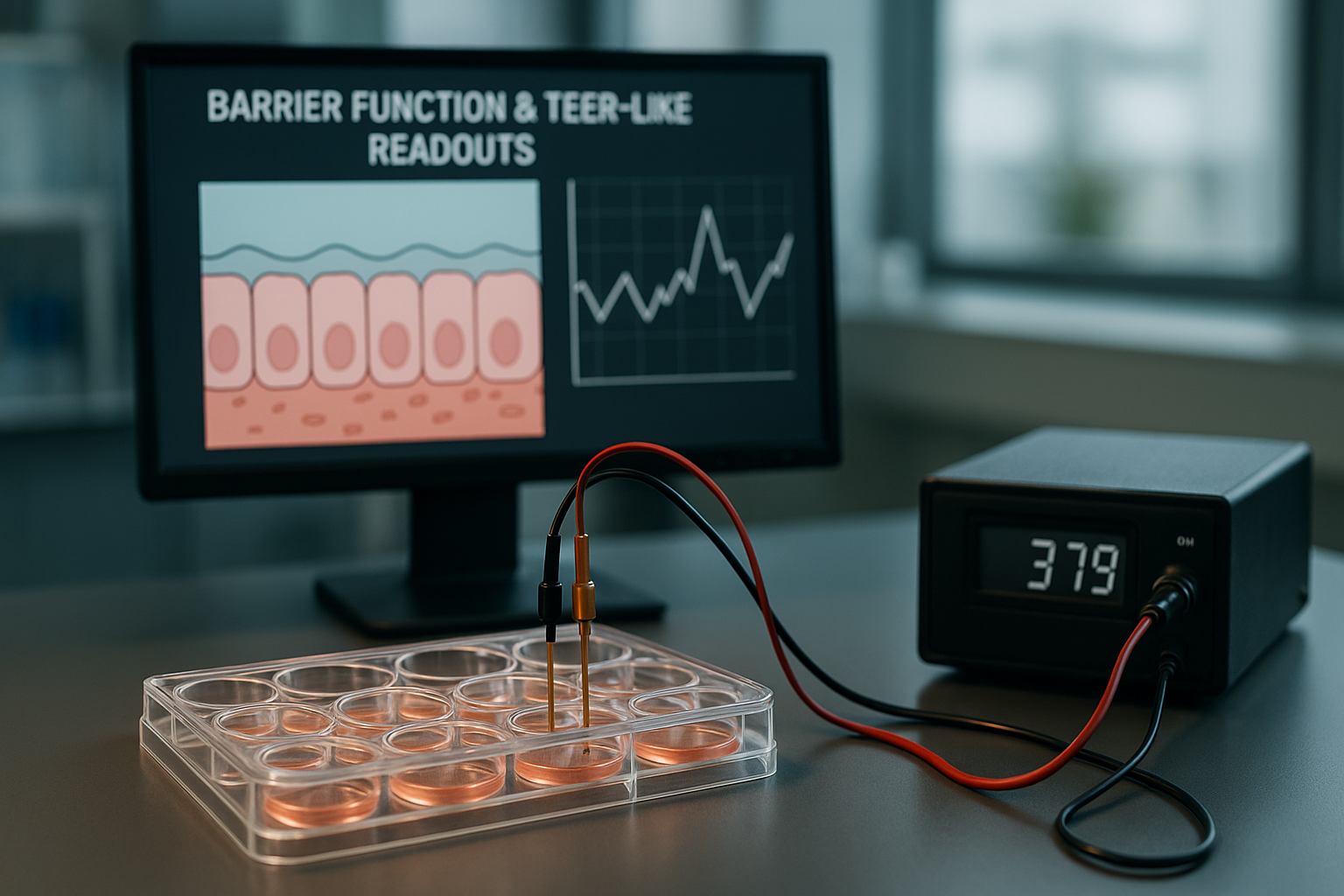
Barrier Function & TEER-like Readouts
The assessment of barrier function is crucial in contemporary cell culture research, especially in fields such as pharmaceuticals and biotechnology. A critical aspect of this assessment involves measuring Transepithelial/Transendothelial Electrical Resistance (TEER), which provides insights into the integrity of cellular layers. As research moves toward more sophisticated models, understanding TEER-like readouts becomes increasingly critical. This article provides an in-depth exploration of barrier functions and TEER-like metrics, outlining their importance, challenges, and technological advances.
The Importance of Barrier Function in Cell Culture
Barrier function is an essential property of epithelial and endothelial layers, ensuring selective permeability and protection against harmful substances. In vitro models that mimic these functions are extensively used for drug screening, toxicity testing, and understanding disease pathologies. TEER is a quantitative technique that measures the ionic flow across cell layers, reflecting their confluence and tight junction integrity.
- Reflects cellular integrity and tight junction function.
- Essential for drug permeability and toxicity studies.
- Critical in understanding pathological disruptions in barrier function.
Challenges in Traditional Barrier Function Assessment
Historically, measuring barrier functions using TEER involved manual, time-consuming processes prone to variability. Traditional electrode configurations often suffer from issues such as electrode fouling and non-uniform current distribution, leading to inconsistent data.
- Manual methods are labor-intensive and error-prone.
- Non-standardized electrode systems cause variability.
- Challenges in maintaining consistent experimental conditions.
Technological Advances and Automation Trends
Recent advances have led to automated systems that enhance precision and reliability in TEER measurements. Automated multiwell systems, equipped with integrated electrodes, now offer continuous and reproducible data collection. The incorporation of live-cell imaging systems, like the zenCELL owl, has further facilitated real-time monitoring of cellular dynamics without disrupting cell environments.
- Automated systems ensure higher reproducibility and lower variability.
- Integration of continuous monitoring and data collection.
- Improved consistency in controlled experimental settings.
Continue reading to explore more advanced insights and strategies.
„`
„`html
Innovative Approaches to TEER Measurement
Technological Integration in TEER Data Collection
The evolution of TEER measurements is increasingly reliant on cutting-edge technological integrations. Modern systems now include microfluidic devices that provide real-time monitoring with improved resolution over traditional methods. The adaptation of cloud data storage and analysis helps bridge geographical gaps, allowing team collaborations globally. Using these platforms, researchers can upload, share, and analyze data concurrently, ensuring a seamless workflow and facilitating advanced comparative studies.
- Adopt microfluidic systems for enhanced real-time data acquisition.
- Leverage cloud-based platforms for collaborative research initiatives.
The Role of Advanced Imaging in Barrier Function Studies
Integrated Imaging and Data Correlation
Incorporating advanced imaging technologies with TEER measurement systems enhances the depth of data interpretation. Techniques such as confocal microscopy, alongside automated TEER systems, allow a detailed visual confirmation of cellular confluence and tight junction integrity. This hybrid approach has significantly improved diagnostic accuracy, as evidenced by pharmaceutical companies using it to screen for drug-induced cytotoxicity across epithelial models.
- Utilize confocal microscopy for insights into cellular morphology.
- Combine imaging data with TEER measurements for robust analysis.
Automation in Multiwell Formats: A Deep Dive
The Power of Parallel Assays
Automation in multiwell formats facilitates high-throughput screening, essential for pharmaceutical and biotechnical sectors. The deployment of integrated electrode systems in 96-well plates, for example, enables simultaneous TEER and real-time optical density measurements, offering dual analytical modalities. A case study with a leading biotech firm demonstrated that these technologies reduced experimental timelines by 40% while increasing data accuracy.
- Embrace high-throughput multiwell systems for simultaneous assays.
- Structure experimental setups to maximize efficiency and accuracy.
Emerging Trends in Sensor Technology for TEER
The Intersection of Sensor Miniaturization and Sensitivity
Emerging sensor technologies are revolutionizing how TEER data is collected and interpreted. New generations of miniaturized electrodes increase measurement sensitivity and reduce sample volume requirements. Innovations such as nanoscale biosensors present unparalleled opportunities for detecting subtle changes in cellular electrical resistance, empowering researchers to pinpoint disruptions in barrier functions with unprecedented detail.
- Invest in nanoscale sensor technologies for enhanced sensitivity.
- Explore biosensor applications for nuanced TEER analysis.
Overcoming Variability in Experimental Design
Optimizing Environmental and Electrode Conditions
Variability in experimental conditions can significantly impact the reliability of TEER measurements. Ensuring uniform cell seeding density and maintaining stringent control over environmental variables such as temperature and CO2 levels are critical. Furthermore, advancements in electrode design – such as ring electrodes – have improved current distribution uniformity, minimizing edge effects that previously compromised data integrity.
- Standardize cell culture protocols to minimize variability.
- Implement advanced electrode designs to ensure uniform measurements.
Cross-validation with Other Cellular Readouts
Holistic Approaches to Barrier Function Analysis
TEER measurements provide crucial data, yet integrating them with other cellular readouts such as permeability assays and impedance spectroscopy offers a holistic view of barrier integrity. This multi-parametric approach aids in validating findings and enhances the robustness of conclusions drawn. For instance, correlating impedance data with permeability assays has improved the sensitivity of biomarker discovery in oncological research.
- Pair TEER data with permeability and impedance assays for comprehensive analysis.
- Validate TEER findings through cross-technique comparisons.
Next, we’ll wrap up with key takeaways, metrics, and a powerful conclusion.
„`
„`html
Novel Approaches to Data Interpretation
Machine Learning and Pattern Recognition
Incorporating machine learning algorithms into TEER data interpretation has transformed the landscape of barrier function research. These algorithms excel in recognizing complex patterns in large datasets, something traditional methods cannot achieve. By applying machine learning, researchers can uncover intricate relationships underlying TEER values and predict barrier disruptions with remarkable accuracy. These advancements not only enhance diagnostic capabilities but also shorten the iterative cycles in experimental research.
- Integrate machine learning for advanced pattern analysis in TEER data.
- Drive research insights through predictive modeling and AI-based diagnostics.
Interdisciplinary Collaborations Amplifying TEER Research
Bridging Gaps Across Scientific Domains
The multifaceted nature of TEER research benefits immensely from interdisciplinary collaborations. Engaging experts from computer science, bioengineering, and materials science enhances the innovative capacity of research teams. Such collaborations expand the horizons of TEER applications by introducing novel materials for electrode construction and pioneering data analytics techniques. These partnerships foster a cross-pollination of ideas, promoting breakthroughs in understanding cellular barriers and related pathologies.
- Foster collaborations to bridge knowledge across scientific domains.
- Leverage diverse expertise for comprehensive barrier function solutions.
Future Directions in TEER Measurement
Pioneering Research and Next-Generation Technologies
TEER measurement continues to evolve, driven by pioneering research and next-generation technologies. The future of TEER lies in further miniaturization, improved sensitivity, and expanded automation capabilities, making it indispensable in precision medicine. Anticipated advancements include the integration of TEER with organ-on-chip models, facilitating accurate simulations of human biology under varying physiological conditions. This futuristic approach promises to redefine paradigms in drug discovery and personalized treatment strategies.
- Invest in next-generation technologies to advance TEER methodologies.
- Explore organ-on-chip systems for enhanced biological simulation.
Conclusion
The exploration of Transepithelial Electrical Resistance (TEER) measurements reveals the evolving intersection of technology and cellular biology. The amalgamation of microfluidics, advanced imaging, and automation in multiwell formats has markedly enhanced the precision and efficiency of barrier function studies. As sensor technologies refine, the integration of meaningful data analytics becomes an essential aspect of modern research methodologies.
In these pursuits, the role of cross-validation with alternative cellular readouts cannot be overstated. Employing a holistic approach substantiates TEER data and propels research toward revolutionary discoveries in the fields of oncology and pharmacology. Interdisciplinary collaborations unfold a plethora of opportunities to innovate, fostering a vibrant environment that continuously pushes the boundaries of scientific inquiry.
The transformative impact of TEER research highlights its relevance not only in academic and clinical settings but also in the broader spectrum of personalized medicine. As we look to the future, the integration of these advanced methodologies promises to enhance our understanding of epithelial barriers significantly. This deeper insight into cellular interfaces stands at the forefront of innovations that could lead to targeted therapies and treatment strategies otherwise unattainable.
In embracing these technologies and methodologies, the scientific community is called upon to engage actively in knowledge-sharing and collaboration. By leveraging collective expertise and innovative resources, we can navigate the complexities of biological barriers with a vision that aligns with the ultimate goal of enhancing human health. Let this be a rallying cry for researchers to continue their pursuit of breakthroughs with unwavering dedication and a shared commitment to pioneering advancements that hold the potential to change lives.
„`
 German
  English
Leave a Reply