
„`html
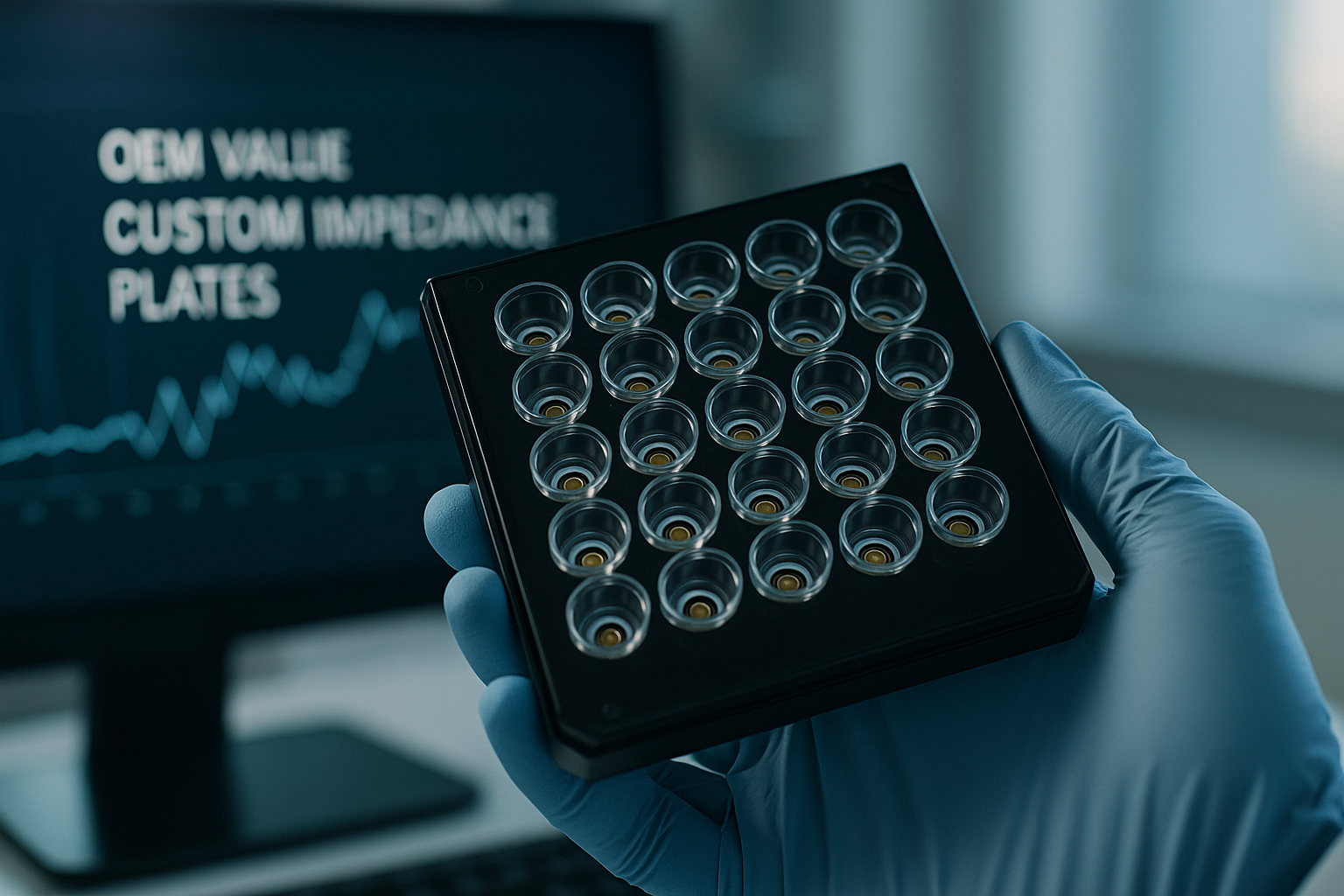
OEM Value: Custom Impedance Plates
In the rapidly evolving field of biotechnology and pharmaceuticals, the need for precise, reliable, and advanced laboratory equipment has never been more crucial. Among the key innovations are custom impedance plates, which offer significant OEM value by enabling highly specific assays in cell culture and diagnostic research. This article explores the development, manufacturing, and application of custom impedance plates, highlighting their role in enhancing laboratory workflows.
Understanding the Role of Custom Impedance Plates
The Importance in Modern Cell Culture Research
Custom impedance plates are pivotal in current cell culture research due to their ability to provide detailed cellular measurements. These plates facilitate real-time monitoring of cell behavior by detecting changes in electrical impedance, a technique valuable for studying cell proliferation, migration, and other dynamics without disrupting the cells.
- Enables non-invasive analysis of cellular activities
- Facilitates high-throughput screening (HTS) and drug discovery
- Suitable for complex assays, including organoids and spheroids
Challenges with Traditional Laboratory Approaches
Addressing Limitations and Technology Gaps
Traditional lab methods often face hurdles such as limited scalability, high resource consumption, and challenges in reproducibility. These shortcomings hinder efficiency and data integrity, impacting research outcomes and throughput.
- High dependency on manual procedures leads to variability
- Conventional assays may lack sensitivity for cell behavior dynamics
- Resource-intensive operations increase operational costs
Advancements in Impedance-Based Technologies
Pioneering Automation and Enhanced Data Quality
Recent advancements in impedance plate technologies have transformed laboratory practices through automation and improved data fidelity. These advances have led to better integration with incubator-based imaging systems, such as the zenCELL owl, facilitating continuous monitoring and automation.
- Automated systems reduce human error and enhance consistency
- Advanced software integration simplifies data analysis
- Improved reproducibility and temporal resolution of cellular events
Continue reading to explore more advanced insights and strategies.
„`
„`html
Leveraging Custom Impedance Plate Flexibility
Tailored Solutions for Diverse Applications
One of the primary advantages of custom impedance plates is their flexibility, which allows for adaptation to various research requirements. Laboratories often face the challenge of varying assay conditions that demand bespoke solutions. Custom impedance plates can be manufactured to meet specific cell line requirements, culture conditions, and experimental protocols. By aligning precisely with experimental goals, these tailored plates enhance the accuracy and repeatability of research findings. For example, custom plates can be optimized for different electrolyte compositions to better simulate physiological environments.
- Engage manufacturers early to customize plate designs for specific applications
Integration with Breakthrough Technologies
Enhancing Symbiosis with Modern Lab Instruments
The advent of technology such as CRISPR and advanced genomic sequencing requires complementary laboratory equipment capable of high-resolution data collection. Custom impedance plates, when used in conjunction with systems like microfluidic devices and high-speed imaging systems, enable simultaneous real-time data acquisition. This integration allows researchers to conduct precise time-lapse studies on cellular responses to genetic modifications or chemical treatments, providing a holistic view of cellular processes.
- Ensure compatibility of impedance plates with existing lab infrastructure to maximize utility
Quality Assurance in Impedance Plate Production
Maintaining Standardization and Consistency
As with any laboratory equipment, the consistency and reliability of custom impedance plates are crucial. The manufacturing process must include rigorous quality control measures to ensure consistent electrical conductivity and material integrity across batches. Utilizing standardized protocols for production can mitigate variability issues, thus maintaining data integrity and facilitating multi-laboratory studies. A notable example is the implementation of ISO-certified manufacturing practices that aid in quality assurance.
- Regularly audit suppliers‘ quality control processes to verify compliance and standards
Cost-Benefit Analysis of Custom Impedance Plates
Budget-Friendly Innovation for Laboratories
While the upfront investment in custom impedance plates and compatible technology can be substantial, the long-term benefits often outweigh the costs. By enabling faster, more accurate assays, these plates reduce the need for iterative testing and resource allocation, ultimately lowering overall research expenditure. Institutions that have adopted this technology report measurable improvements in throughput and efficiency, often justifying the expenditure within the first year of use.
- Consider total cost of ownership and potential for resource reallocation when budgeting
Driving Pharmaceutical Advancements
Implications for Drug Development and Testing
In the pharmaceutical industry, the use of custom impedance plates is instrumental in speeding up drug development processes. These plates facilitate rapid phenotypic screening of compound libraries, significantly shortening lead time from discovery to clinical testing. By providing real-time feedback loops in cell viability and toxicity assays, researchers can filter viable drug candidates more efficiently than with traditional techniques. Companies leveraging these advanced testing methods report a 20% reduction in time-to-market for new drugs.
- Integrate impedance data into the drug development pipeline to enhance decision-making
Applying Impedance Technology to Diagnostics
Enhancing Precision in Medical Testing
The capability of custom impedance plates to provide precise measurements extends their application to diagnostic platforms. For instance, in cancer diagnostics, they offer a novel approach to characterizing tumor cell lines by detecting subtle electrical changes. This enhances the understanding of tumor dynamics, aiding in the development of more targeted and effective therapies. Additionally, impedance-based platforms are increasingly used in point-of-care testing, providing rapid and accurate results in clinical settings.
- Collaborate with diagnostic developers to adapt impedance technology for clinical use
Training and Education for Optimal Utilization
Empowering Researchers with Skills and Knowledge
For laboratories to fully realize the potential of custom impedance plates, it is essential that researchers are thoroughly trained in their use and data interpretation. Workshops, online modules, and hands-on training sessions are effective methods to build user expertise. Institutions investing in training often see improved outcomes in research and development projects as individuals apply advanced techniques with confidence and precision.
- Include impedance plate training in standard lab curriculum to bolster research capabilities
Next, we'll wrap up with key takeaways, metrics, and a powerful conclusion.
„`
„`html
Sustainability and Impedance Technology
Promoting Eco-Friendly Lab Practices
Embracing technological advancements like custom impedance plates is also a step towards more sustainable laboratory practices. These plates contribute to reducing material waste, as they are often reusable and designed for longevity. By minimizing the need for disposable assays and optimizing resource utilization, laboratories can significantly decrease their environmental footprint. Furthermore, the precision of impedance-based technology reduces sample and reagent consumption, aligning with the growing demand for green and sustainable scientific methodologies.
- Implement reusability programs for impedance plates to enhance sustainability efforts
Advancing Collaborative Research
Fostering Interdisciplinary Studies
The unique capabilities of custom impedance plates naturally encourage cross-disciplinary collaboration within the scientific community. By providing a versatile platform that can be integrated into various areas of research, these plates promote synergy between biologists, chemists, and engineers. This multidisciplinary engagement paves the way for innovative solutions and accelerates scientific discovery. As a result, institutions that adopt an interdisciplinary approach often experience breakthroughs that were once thought unachievable.
- Encourage joint ventures among departments to optimize the use of impedance technology
The Future of Custom Impedance Plates
Innovative Prospects on the Horizon
The horizon for custom impedance technology is promising, with advancements in digital miniaturization and smart materials poised to drive further innovation. As researchers continue to push the boundaries of what’s achievable with impedance technology, we can anticipate even more refined and insightful data acquisition systems. The integration of AI and machine learning could unlock new potential, allowing for predictive modeling that can foresee experimental outcomes and streamline laboratory workflows. These developments not only promise to enhance the existing capabilities of custom impedance plates but also to unveil new frontiers in biomedical research and diagnostics.
- Stay informed about emerging technologies that complement impedance advances
Conclusion
The exploration of custom impedance plates reveals a transformative tool within the research landscape. As discussed, their flexibility in design and compatibility with cutting-edge technologies significantly enhance research precision and efficiency. Quality assurance measures and cost-benefit considerations underscore their reliability and economic feasibility, ensuring that labs can sustain high levels of productivity without sacrificing quality or accuracy.
By expediting processes in pharmaceutical sectors and elevating diagnostic capabilities, these plates are not merely tools but rather pivotal components in propelling innovation and scientific advancements. They have become essential assets in tackling contemporary scientific challenges, especially in high-stakes fields like cancer research and drug development.
Sustainability is another vital consideration, with custom impedance plates championing eco-friendly practices in laboratories. Their contribution to reducing waste and promoting resource efficiency aligns with the modern ethos of sustainable science, reinforcing their role in the future of research.
The seamless integration of these plates into interdisciplinary studies further cements their position as facilitators of collaboration and discovery. By bridging gaps between various scientific domains, they have the potential to redefine research dynamics, fostering an environment ripe for breakthroughs.
Looking forward, the continuing evolution of custom impedance plates promises to keep pace with—and often lead—scientific and technological innovations. Institutions that embrace this technology can expect greater research agility, whether through the adoption of new material sciences, digital advancements, or AI-enhanced methodologies.
As we conclude, the advantages of custom impedance plates are apparent: they are not only valuable in achieving scientific precision but are also indispensable in pushing the boundaries of what is scientifically possible. Researchers and institutions are encouraged to explore this pioneering technology and consider how custom impedance solutions can elevate their research impact. By fostering a culture of innovation and sustainability, we can collectively advance science, enhance discovery, and improve outcomes that affect the global community.
„`
 German
  English
Leave a Reply