
„`html
Compatibility with Readers & Automation Systems
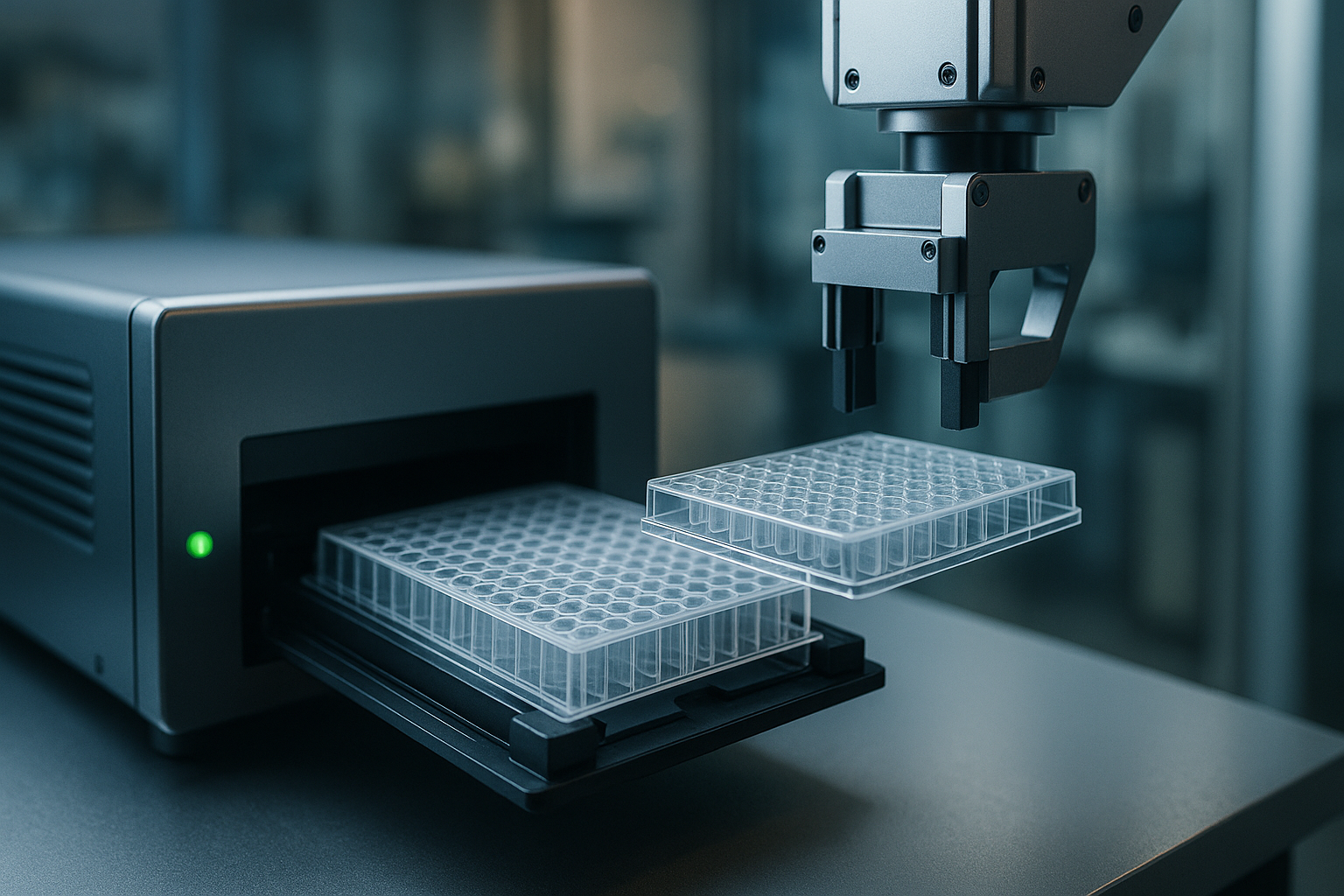
In the rapidly evolving world of life sciences, laboratory plasticware, particularly multiwell plates, cell culture plates, and customized labware, plays a critical role in research, diagnostics, and pharmaceutical manufacturing. However, the seamless integration of these plastics with readers and automation systems remains a significant challenge. This article provides an in-depth examination of the compatibility of laboratory plastics with modern readers and automation technologies, offering insights into design and manufacturing strategies to address these challenges.
Introduction: The Importance of Compatibility in Lab Automation
The Role of Labware in Research Advancements
Today’s biotech and pharmaceutical industries demand efficiency, precision, and reproducibility in all processes. As research moves towards high-throughput and automated systems, the compatibility of laboratory plastics with readers and automation systems has become crucial. Ensuring that these plastics integrate smoothly with advanced technology not only enhances productivity but also improves data accuracy.
Common Challenges and Limitations of Traditional Approaches
Identifying Bottlenecks in Current Systems
Traditional approaches to laboratory plasticware often face hurdles such as poor optical clarity, inconsistent dimensions, and limited material compatibility, which can impede integration with automated systems.
- Incompatible designs causing readout errors or mechanical issues
- Variation in plastic material affecting sensor readings
- Non-standard dimensions leading to misalignment
The need for precision-engineered lab plastics designed for compatibility with automation systems is evident as laboratories push for greater efficiency.
Technological Advances and Automation Trends
Innovations Driving Synergy Between Plastics and Automation
Recent technological advances are bridging the gap between laboratory plastics and automation systems. With the adoption of design-for-manufacturing (DFM) principles, materials like polystyrene (PS), polypropylene (PP), and cyclo-olefin copolymer (COC) are now selected for their compatibility with specific reader technologies.
- Design-for-manufacturing prioritizes appliance with automation needs
- Advanced materials enhance optical consistency for improved data acquisition
As automation trends continue to evolve, manufacturers are increasingly focused on crafting plastics that are inherently compatible with sophisticated readers and automation systems.
Practical Examples and Workflows Using Live-Cell Imaging
The zenCELL owl: A Case Study in Integrated Systems
An exemplary case of enhanced compatibility is the zenCELL owl, a compact imaging system designed for use within incubators. This system exemplifies the benefits of integrating labware directly with automation tools to support continuous, real-time cell monitoring.
- Supports seamless data collection with incubator compatibility
- Allows for real-time analysis, improving experimental workflow
By facilitating better integration, systems like zenCELL owl demonstrate how strategic design in lab plastics can drive advancements in live-cell imaging workflows.
How Incubator-Based Imaging Improves Reproducibility and Data Quality
Real-Time Monitoring in Controlled Environments
The ability to monitor cells in real-time within a controlled incubator environment enhances the reproducibility and quality of experimental data. Incubator-based imaging systems demonstrate several advantages:
- Ensures consistent environmental conditions
- Eliminates transfer errors and environmental disturbances
- Facilitates comprehensive and continuous data collection
This innovation points towards future trends where the integration of lab plastics and imaging systems is designed to enhance the reliability of high-stakes research outcomes.
Continue reading to explore more advanced insights and strategies.
„`
„`html
Precision Manufacturing Techniques for Enhanced Compatibility
Tailored Solutions with CNC and Injection Molding
Precision manufacturing techniques such as CNC machining and injection molding have revolutionized the production of laboratory plastics compatible with automation systems. These methods allow for meticulous control over dimensions and material properties, ensuring consistent performance across batches.
- CNC machining enables the creation of complex geometries with tight tolerances
- Injection molding provides cost-effective, high-volume production with uniform precision
By leveraging these advanced manufacturing techniques, laboratories can customize plasticware to meet specific automation needs, reducing the risk of errors and enhancing system compatibility.
The Rise of Smart Labware in Automated Environments
Integrated Technologies for Real-Time Data Collection
Smart labware, embedded with sensors and IoT technology, represents the next frontier in automation compatibility. These innovative solutions enable real-time data collection and communication with automated systems, streamlining laboratory processes.
- Embedded sensors monitor environmental conditions and plastic integrity
- IoT-enabled labware facilitates remote control and automatic data logging
By integrating smart capabilities into standard labware, researchers can enhance data accuracy and system responsiveness, paving the way for more efficient and connected lab environments.
Material Innovations in Laboratory Plastics
Advanced Polymers and Coatings for Functional Performance
The development of advanced polymers and surface coatings has significantly improved the compatibility of laboratory plastics with automation systems. Materials such as cyclo-olefin copolymers (COC) and specialized coatings offer superior optical clarity, chemical resistance, and durability.
- COC plastics provide exceptional transparency for clearer imaging
- Advanced coatings improve surface properties and reduce cross-contamination
These material innovations ensure that laboratory plastics meet the demanding requirements of automated readers and enhance overall research effectiveness.
Automation-Ready Design Principles
Future-Proofing Labware for Seamless Integration
Designing labware with automation in mind requires a strategic approach to ensure that products are future-proof and capable of evolving with technological advancements. Key design principles include standardizing dimensions, improving structural integrity, and ensuring universal compatibility with existing automation systems.
- Standardized labware fits a broad range of existing robotic systems
- Enhanced structural integrity prevents deformation during automated handling
By adhering to these design principles, manufacturers can create versatile labware that integrates smoothly into the ever-evolving landscape of lab automation.
Case Study: Adaptation of Microplates for High-Throughput Screening
Improving Efficiency in Drug Discovery
Microplates are a staple in high-throughput screening (HTS) for drug discovery, yet their effectiveness relies on their compatibility with automation systems. Designing microplates that meet the rigorous demands of HTS can significantly accelerate the drug development pipeline.
- Optimized microplate design reduces manual handling and minimizes error
- Consistent well geometry ensures accurate liquid handling and detection
This case study highlights how precision-engineered microplates enhance protocol accuracy, speed up screening processes, and ultimately improve the efficiency of drug discovery operations.
Automating Quality Control in Labware Production
Ensuring Consistent High Standards
Automating the quality control process in labware production is vital for maintaining reproducibility and precision. Innovative approaches such as automated dimensional analysis and in-line inspection systems can detect deviations in product specifications early in the production process.
- Automated systems identify defects more accurately than manual inspections
- Continuous monitoring enhances product consistency and reliability
By integrating automation into quality control, manufacturers can guarantee that laboratory plastics consistently meet the standards required for high-performance automated systems.
Collaborative Design Processes with Automation Manufacturers
Building Pioneering Solutions Through Partnership
Collaboration between laboratory plasticware producers and automation system manufacturers can lead to groundbreaking solutions that optimize compatibility. Joint development efforts ensure that the design and functionality of labware align with the specific needs of automation technologies.
- Cross-industry partnerships foster innovation and tailored solutions
- Collaborative feedback loops enhance both product design and performance
Partnerships in the design process not only help to address existing integration issues but also drive the creation of new standards that better serve the needs of modern laboratories.
Next, we’ll wrap up with key takeaways, metrics, and a powerful conclusion.
„`
„`html
Integrating Sustainability in Labware Production
Eco-Friendly Materials and Processes
Sustainability has become a key focus in laboratory plastic manufacturing, as the science community seeks to reduce environmental impact. Adopting eco-friendly materials, such as biodegradable polymers and recycled plastics, along with energy-efficient production methods, supports a more sustainable future for laboratory practices.
- Biodegradable plastics reduce waste and environmental footprint
- Recycling programs and sustainable sourcing optimize resource use
By incorporating sustainable practices, manufacturers not only comply with environmental regulations but also position themselves as leaders in the green innovation space, appealing to eco-conscious customers.
Customized Labware Solutions for Niche Applications
Addressing Specific Research Needs
While standardization facilitates broad compatibility, some research applications require bespoke solutions. Custom-designed labware, tailored to meet the specific needs of niche sectors such as genomics or proteomics, can greatly enhance experimental efficiency and reliability.
- Customized designs improve workflow integration in specialized labs
- Material and design adjustments cater to unique experimental requirements
Customizable labware empowers researchers to push the boundaries of their investigations, ensuring that each experimental setup is optimized for optimal outcomes.
Future Trends in Labware and Automation
Anticipating Emerging Needs
The future of laboratory plastics and automation systems is poised for exciting growth, driven by technological advancements and shifting scientific priorities. Emerging trends include the integration of artificial intelligence, more intuitive user interfaces, and an increased emphasis on collaborative platforms.
- AI-driven analytics enhance automation efficiency and decision-making
- Intuitive interfaces simplify the user experience, broadening accessibility
As laboratories continue to evolve, staying ahead of these trends will be essential for institutions aiming to maintain competitive edge and operational excellence.
Conclusion
Throughout this article, we have explored the intricate dynamics between laboratory plastics and automation systems, uncovering the pivotal role that manufacturing techniques, material innovations, and design principles play in achieving seamless integration. Key takeaways include the transformative power of precision manufacturing capabilities, such as CNC machining and injection molding, which offer the exactitude necessary for standardizing products compatible with complex automation systems.
The rise of smart labware, characterized by sensor and IoT integration, marks an era of heightened data accuracy and connectivity, heralding a shift towards smarter, more responsive laboratory environments. Material advancements in polymers and coatings continue to push the boundaries of what is possible, offering enhanced durability, clarity, and chemical resistance to meet the rigorous demands of modern science.
Sustainable practices and customized labware solutions also emerged as critical themes, highlighting a dual commitment to environmental responsibility and tailored functionality. By prioritizing eco-friendly materials and energy-efficient processes, manufacturers can considerably lessen their ecological impact while simultaneously meeting the distinct needs of specialized research fields.
As we look to the future, collaboration with automation system designers and embracing emerging trends, such as AI and intuitive interfaces, will remain vital strategies in maintaining relevance and fostering innovation. Whether through interdisciplinary partnerships or forward-thinking design strategies, these efforts collectively contribute towards the cultivation of more efficient, precise, and adaptive lab environments for the scholars and industry professionals driving scientific discovery.
The path forward is paved with possibilities for those visionary manufacturers and laboratories willing to embrace change and leverage technology to its fullest potential. By doing so, they not only enhance the quality of their outputs but also secure their place at the forefront of the evolving scientific landscape. For those invested in continuous improvement, this is an invitation to actively participate in shaping the future of laboratory science—where innovation and collaboration form the cornerstone of success.
„`
 German
  English
Leave a Reply