
„`html
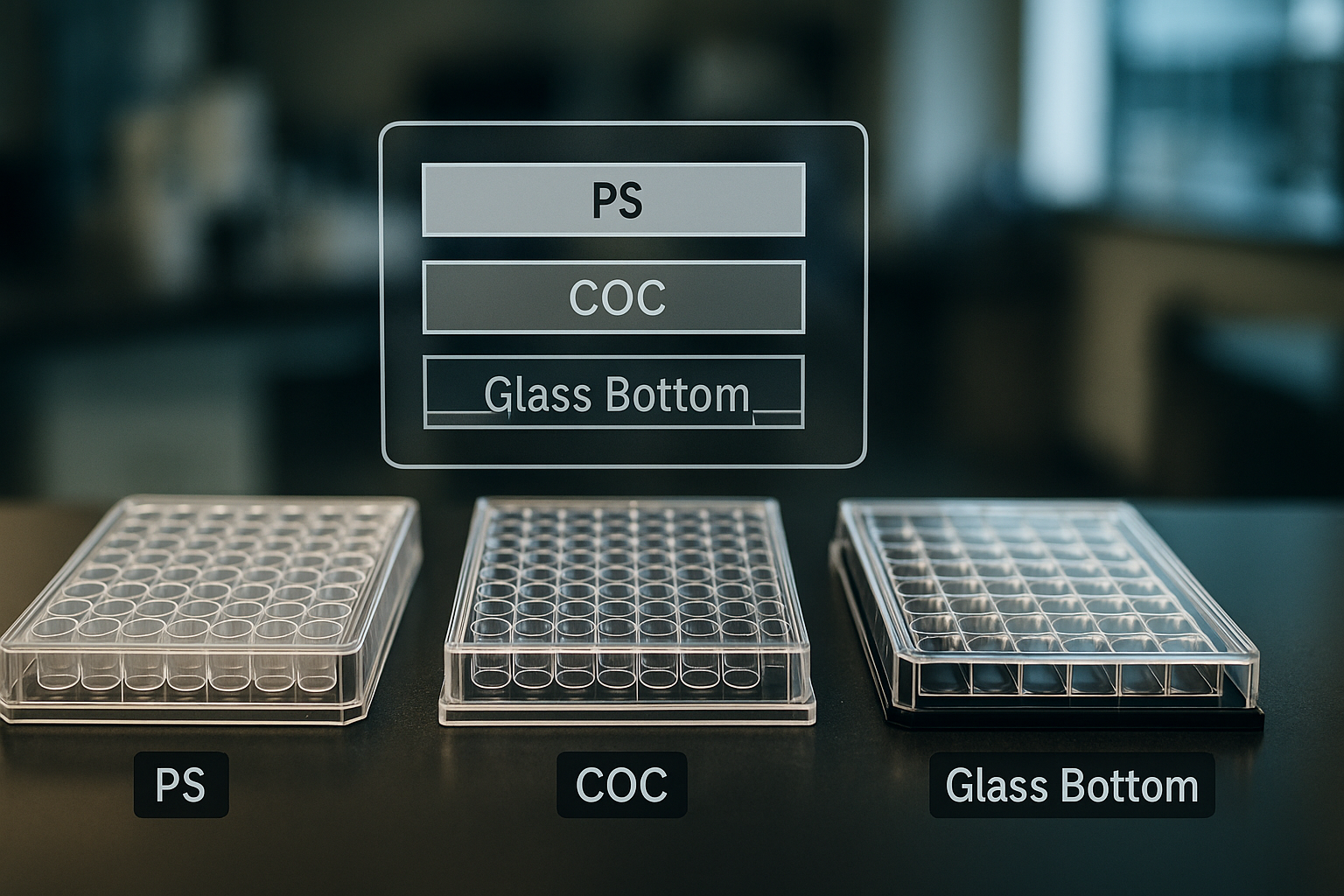
Material Selection: PS vs. COC vs. Glass Bottom
In the domain of laboratory plastics, the choice of material is paramount to the performance and efficiency of experimental workflows. Selecting materials such as Polystyrene (PS), Cyclic Olefin Copolymer (COC), or glass bottoms requires a rigorous understanding of the specific demands of diverse laboratory applications, such as multiwell plates and cell culture vessels. This article delves into the scientific criteria guiding material selection and the underlying implications for biotechnology and pharmaceutical applications.
Understanding Material Characteristics
The Role of Polystyrene (PS) in Laboratory Plastics
Polystyrene (PS) is widely recognized for its versatility and economic benefits in laboratory environments. Cost-effectiveness and ease of fabrication through injection molding make PS a go-to option for consumable labware, including petri dishes and multiwell plates. However, researchers must weigh PS’s optical clarity and mechanical stability against its susceptibility to certain chemicals, which may limit its applications in harsh chemical environments.
- Ideal for applications requiring optical clarity
- Cost-effective for large-scale consumables
- Limited chemical resistance
Cyclic Olefin Copolymer (COC): A Superior Alternative?
Cyclic Olefin Copolymer (COC) is increasingly favored in applications where enhanced chemical resistance is necessary. COC presents excellent optical properties, akin to glass, thus catering to high-precision imaging needs. Moreover, COC’s innate barrier properties against water and gases make it suitable for applications demanding long-term stability without compromising sample integrity.
- High chemical and UV resistance
- Superior clarity comparable to glass
- Excellent barrier properties
When to Opt for Glass-Bottom Labware
Glass-bottom labware occupies a niche position within laboratories focusing on high-resolution imaging and sensitive optical applications. Despite the higher production costs, the optical advantages of glass bottoms are unparalleled, providing distortion-free imaging crucial for detailed cellular studies. Researchers balancing budget constraints may opt for hybrid designs incorporating both glass bottoms and plastic wells for optimized performance.
- Distortion-free imaging suitable for microscopy
- Higher cost but superior optical characteristics
- Often used in hybrid plate designs
Continue reading to explore more advanced insights and strategies.
„`
„`html
Enhancing Lab Efficiency with Material Choices
The strategic role of material selection in workflow optimization
In modern laboratories, the choice of material impacts not just the performance of each experiment but also the overall efficiency of laboratory workflows. Consider a scenario where a high-throughput screening process is conducted using multiwell plates. Utilizing PS may be cost-effective for high volume needs, but switching to COC for critical stages can enhance accuracy and reduce error margins due to its superior optical properties and resistance to external factors such as humidity, which can otherwise distort results over time.
- Regularly evaluate the material performance under specific experimental conditions
Innovative Applications and Material Adaptation
Leveraging materials for specialized research requirements
Advancements in biotechnology and pharmaceutical research often necessitate adaptive approaches to traditional laboratory practices. For instance, cell cultures intended for high-resolution imaging studies benefit significantly from the distortion-free clarity offered by glass-bottom plates. In drug discovery, the robust and inert nature of COC can help maintain the integrity of sensitive compounds, especially in long-term studies.
- Identify hybrid material solutions for better utility in niche applications
Economic Considerations in Material Selection
Balancing cost and research outcomes
Budget constraints are an inevitable part of most research laboratories. Hence, it is crucial to conduct a cost-benefit analysis when selecting materials. PS remains a popular choice for large-scale, non-specific applications due to its affordableness, whereas COC’s higher initial cost may be justified by its longevity and better performance in critical experiments. For high-accuracy needs, one might consider a mixed-use approach, incorporating glass only when necessary, where optical precision outweighs budgetary concerns.
- Evaluate the lifecycle costs versus upfront expenses for material choice
Considerations for Sustainability in Material Selection
Integrating sustainable practices into research setups
Environmental considerations are increasingly shaping research practices. Materials like PS are non-biodegradable, prompting a shift towards more sustainable options. COC presents itself as a more eco-friendly choice with a reduced carbon footprint during production when compared to traditionally-used plastics. By opting for recyclable materials where possible, laboratories can reduce waste and promote environmentally-responsible scientific research.
- Incorporate material recycling programs within the laboratory
Impact of Material Properties on Experimental Validity
The significance of choosing materials based on their interaction with experimental substances
The choice of material can directly affect the validity of experimental results. Given the susceptibility of PS to certain solvents, using it in chemical assays can inadvertently introduce artifacts. Conversely, COC’s chemical inertness makes it a preferred choice for assays involving reagents that might otherwise degrade PS. Understanding these intricacies can prevent experimental anomalies and yield more reproducible outcomes.
- Conduct compatibility tests between laboratory materials and experimental reagents
Case Study: Transitioning to Advanced Material Solutions
An evaluation of the impact of material transformation on research efficacy
A leading biotechnology firm transitioned from using PS to COC materials in their multi-step drug screening process, resulting in a significant reduction of false positives and improved assay consistency. This change was driven by the need for enhanced chemical resistance and optical clarity, critical in stage-sensitive research aiming to facilitate the clear observation of drug interactions under enhanced imaging conditions.
- Document and analyze research advancements post material transitions to track efficiency improvements
Strategizing for Material Performance Optimization
Steps to ensure optimal material utility and experimental success
Maximizing the performance of selected materials necessitates a strategic approach. First, conduct a meticulous assessment of each material’s attributes against the research objectives. Next, establish protocols that exploit the strengths of each type of material; this might involve using COC for precision-driven tasks while reverting to PS for bulk operations. Constantly revisiting the material usage protocols based on new technological advancements can further enhance research outcomes.
- Implement periodic review sessions to reassess material efficiency in active research projects
Next, we’ll wrap up with key takeaways, metrics, and a powerful conclusion.
„`
„`html
Advancements in Material Science and Their Influence on Laboratory Efficiency
Integrating emerging material innovations to elevate research practices
As material science progresses, laboratories benefit by accessing tools with unparalleled performance capabilities. The incorporation of nanocomposite materials offers innovative enhancements over traditional laboratory resources. These advanced materials provide remarkable benefits such as improved thermal stability, higher mechanical strength, and enhanced electronic properties that traditional PS or COC materials might lack. Such attributes make nanocomposites attractive for creating more durable lab equipment that can withstand rigorous experimental demands.
- Investigate new material technology offerings to capitalize on potential research efficiencies
User Training and Capabilities in Material Utilization
Empowering laboratory staff through optimal material education
Knowledge about the properties and potential of laboratory materials needs to be current among all science professionals. Educating lab personnel on the material benefits and compatibility issues is crucial in maximizing material utility. Tailored training programs that address the unique challenges of material selection foster a deeper understanding of how different materials can impact experimental outcomes, leading to more informed decisions and better research output.
- Develop comprehensive material training sessions for laboratory staff
Optimizing Laboratory Material Inventory Management
Streamlining resource allocation through strategic material management
Effective inventory management is crucial for laboratories aiming to balance cost with research excellence. Implementing inventory systems that track material usage rates and expiration dates can minimize waste and ensure a steady supply of essential materials. Moreover, integrating analytics into inventory systems can help predict future material needs, allowing for strategic purchases that maintain budget constraints without compromising on quality.
- Utilize inventory management software to optimize material use and financial investment
Conclusion
In the dynamic environment of laboratory settings, careful material selection plays a pivotal role in driving experimental efficacy and advancing scientific inquiry. From the initial consideration of performance attributes and cost-efficiency—where PS and COC offer distinct advantages—to investigating cutting-edge materials like nanocomposites, the decision heavily influences the outcome of research projects.
The importance of comprehensive material evaluation goes beyond mere selection; it extends to optimizing laboratory workflow, maintaining sustainability, and ensuring the integrity of research data. As innovations in material science continue to evolve, laboratories must stay informed to harness the full potential of these advancements. Implementing state-of-the-art inventory management and providing continuous training for staff further bolsters research capabilities, ensuring that material resources are used to their fullest potential.
The ultimate responsibility rests on stakeholders within the research community to not only adapt to but lead in adopting sustainable and efficient material practices. By doing so, they contribute towards a future wherein scientific exploration is not only more innovative and accurate but also environmentally conscientious.
As the world of material science unfolds, the call to action is clear: embrace the opportunities that material choices provide, continue adapting to the evolving landscape, and collaboratively steer research towards breakthroughs that hold the promise of a better tomorrow. Laboratories that commit to these goals will find themselves at the forefront of discovery, ushering in an era where precision, sustainability, and economy coexist seamlessly in the pursuit of knowledge.
„`
 German
  English
Leave a Reply