
„`html
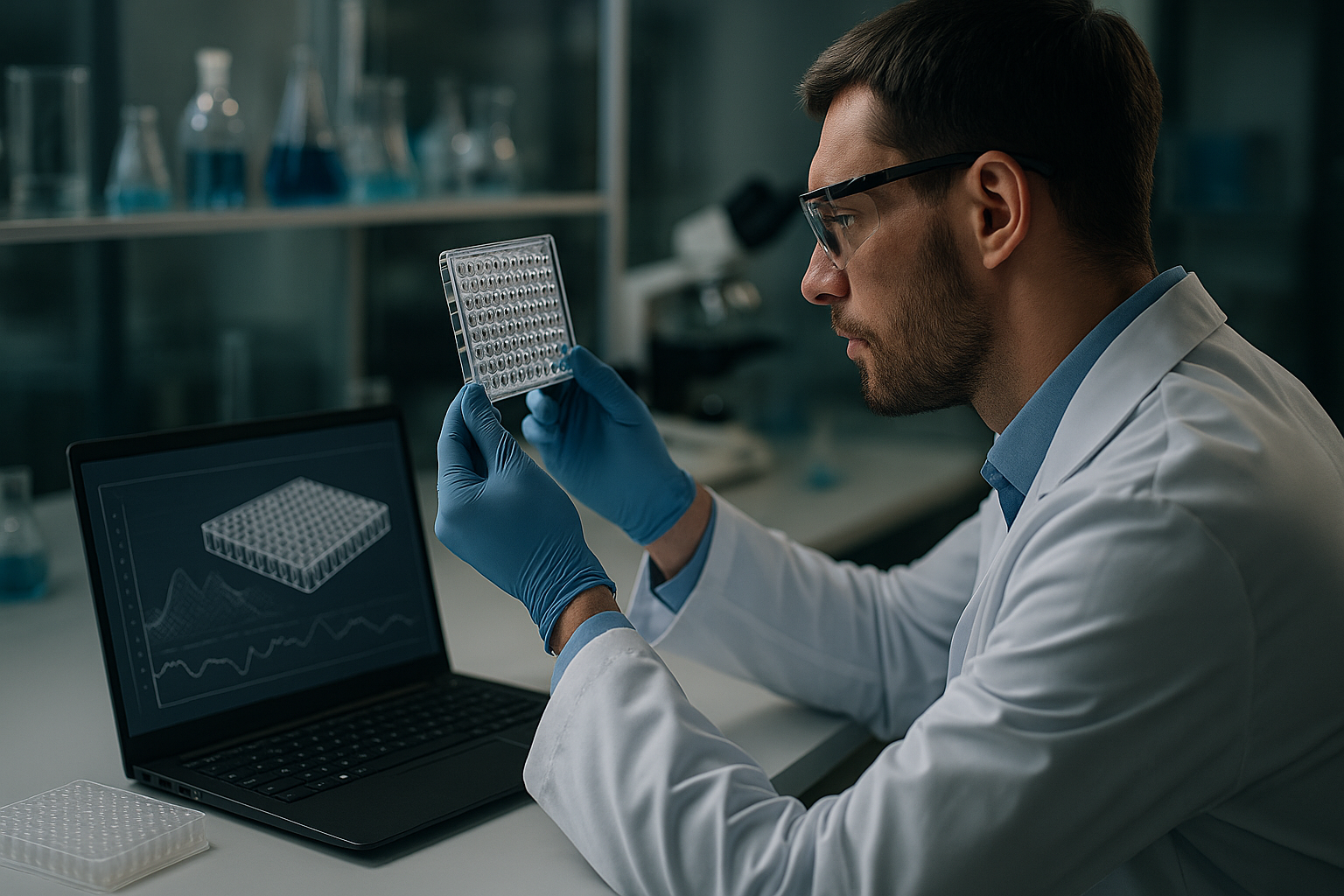
Lab Validation of New Plate Designs
The realm of cell culture research is constantly evolving, and with it, the need for innovative laboratory plasticware. The development of new plate designs is a critical step in ensuring that researchers have access to the tools necessary for precise and reproducible experiments. In this article, we will delve into the importance of lab validation for new plate designs, exploring the journey from concept to production and the challenges faced along the way. Readers will gain insights into the technological advances that are shaping the industry and how these innovations improve the quality and reliability of research outcomes.
Common Challenges and Limitations of Traditional Approaches
The traditional approaches to developing lab plates often fall short due to limitations in material selection, design capabilities, and process controls, which can impede the reliability and reproducibility of scientific results. Historically, the design-for-manufacturing (DFM) principles were restrained by the lack of advanced prototyping technologies and material limitations, such as those pertinent to standard polystyrene or polypropylene plates.
- Conventional materials may not meet the optical or biological criteria necessary for advanced applications.
- Limited prototyping options can delay iteration and refinement of designs.
- Surface treatments are often insufficiently characterized, affecting the consistency of cell growth or biochemical reactivity.
Overcoming these challenges necessitates an integrative approach that embraces modern material sciences and state-of-the-art manufacturing technologies.
Technological Advances and Automation Trends
Recent technological advances have opened new avenues in the development and validation of lab plate designs. Automated manufacturing processes, combined with innovations in polymer chemistry, provide unparalleled accuracy and repeatability.
Advanced Manufacturing Techniques
Injection molding, in particular, stands at the forefront of these technological advances. It allows for precise control over dimensional accuracy and scalability, essential for producing multiwell plates at both small and large scales.
- Enhanced material selection, including cyclic olefin copolymers (COC) for superior optical clarity and chemical resistance.
- Robust surface treatments that improve attachment properties for cell cultures.
- Integration of process validation and rigorous quality controls, ensuring batch consistency.
Automation in manufacturing ensures that every batch meets strict regulatory standards, critical in cGMP and GMP environments.
Continue reading to explore more advanced insights and strategies.
„`
„`html
Improving Experimental Validity
The Role of Rigorous Testing Protocols
Experimental validity hinges on the application of rigorous testing protocols during the lab validation process. This step ensures that new plate designs function as intended under various experimental conditions. By implementing comprehensive validation protocols, laboratories can mitigate errors that may arise from plate design flaws. These protocols often include stress testing the plates under temperature fluctuations, exposure to different chemical substances, and evaluating mechanical resistance.
- Implement stress-test protocols to identify weaknesses in material resilience and design integrity.
In real-world applications, companies like Corning Life Sciences have developed a series of tests to confirm the optical and mechanical stability of their microplates, crucial for high-throughput screening processes.
Leveraging Computational Modeling
From Simulation to Reality
Computational modeling plays a pivotal role in the innovative design of lab plates, allowing for virtual simulations that can predict how changes in geometry and material will affect performance. By employing advanced software tools, designers can simulate the fluid dynamics within wells or the heat distribution across a plate, facilitating more efficient design iterations at a fraction of the time and cost.
- Utilize computational fluid dynamics (CFD) models to optimize well design for improved mixing and distribution.
For instance, Thermo Fisher Scientific uses CFD simulations to enhance the thermal conductivity of their PCR plates, which is critical for achieving uniform thermal cycling during PCR reactions. This approach reduces costly physical prototypes and accelerates time to market.
Surface Functionalization Techniques
Enhancing Plate Performance
The functionalization of plate surfaces is integral to enhancing their usability for specific biological experiments. Techniques such as plasma treatment, chemical coating, and surface roughening are commonly employed to modify the plate surface to improve cell adherence, protein binding, or hydrophobicity.
- Consider plasma-enhanced chemical vapor deposition (PECVD) to add specific functional groups to plate surfaces.
In pharmaceutical research, plates with improved surface functionality have proven essential in assays that demand high sensitivity and low background noise, such as enzymatic reactions and cell proliferation studies.
Environmental Considerations in Plate Manufacturing
Balancing Innovation with Sustainability
As sustainability becomes a global priority, lab plate manufacturers are adopting environmentally friendly practices throughout the lifecycle of plate production. This includes using recycled materials, reducing energy consumption during manufacturing, and ensuring that waste disposal processes are eco-friendly.
- Integrate life-cycle assessment (LCA) tools to evaluate the environmental impact of new plate designs.
Companies such as Greiner Bio-One are pioneering the use of bio-based polymers, significantly reducing the carbon footprint of their labware products without compromising quality. These initiatives not only align with green chemistry principles but also meet increasing demands from environmentally conscious researchers.
The Importance of User-Centered Design
A Collaborative Approach to Innovation
User-centered design is the cornerstone of successful lab plate development. By actively engaging with scientists and end-users during the design process, manufacturers can tailor their products to address specific research needs, ultimately enhancing user experience and satisfaction.
- Conduct focus groups and gather feedback from end-users during the design phase to identify pain points.
Case studies from Eppendorf show that incorporating user feedback led to the development of ergonomic features in their tube and plate products, increasing ease of use and reducing repetitive strain injuries among laboratory personnel.
Regulatory Compliance and Standardization
Navigating the Compliance Landscape
Compliance with regulatory standards is mandatory for lab plate designs, especially those used in clinical and commercial settings. Understanding and adhering to regulations such as ISO 13485, which specifies requirements for medical devices, or the FDA’s 21 CFR Part 820, which details quality system regulations, is non-negotiable.
- Develop a comprehensive regulatory checklist to ensure all products meet necessary compliance standards before release.
Mettler Toledo has successfully integrated regulatory compliance into their product development lifecycle, ensuring that their weighing and laboratory products meet all international standards for quality assurance.
Next, we'll wrap up with key takeaways, metrics, and a powerful conclusion.
„`
„`html
Best Practices for Quality Assurance
Ensuring Precision and Accuracy
Quality assurance in lab plate design is a multi-faceted approach that necessitates diligence and attention to detail at every stage of the manufacturing process. Through strategic quality control measures, manufacturers can ensure that their products consistently meet the rigorous demands of laboratory settings. This involves process-oriented strategies and detailed inspection methods to identify and rectify defects early in the production process.
- Implement stringent inspection regimes, including automated vision inspections, to enhance defect detection and corrective actions.
Companies like Sartorius have integrated automated quality assurance protocols that consistently yield plates with high precision and reliability, thereby enhancing their reputation for quality in laboratory products.
Embracing Innovative Manufacturing Technologies
Adapting to New Technologies
Innovation in manufacturing technologies offers significant enhancements in the production of lab plates. Techniques such as 3D printing and robotics have revolutionized the way labware is designed and manufactured, allowing for increased customization, rapid prototyping, and scalable production. 3D printing, in particular, provides the versatility to produce complex geometries and specialized materials that traditional methods cannot easily replicate.
- Explore the use of additive manufacturing techniques to create customized lab plates tailored to specific experimental needs.
By leveraging these technologies, companies can quickly adapt to evolving scientific requirements, providing researchers with tools that are uniquely suited to their specific research applications.
Future of Lab Plate Design and Development
Anticipating Trends and Innovations
The future of lab plate design is poised to undergo substantial transformations driven by technological advancements and evolving scientific demands. With an increasing emphasis on miniaturization and automation, the next generation of lab plates will likely focus on microfluidics and integrated lab-on-a-chip technologies, which offer more precise control over experimental conditions and reduced reagent consumption.
- Stay abreast of emerging trends in microfluidics and lab-on-a-chip technologies to remain competitive.
Companies investing in research and development to explore these burgeoning fields will find themselves at the cutting edge of lab technology, ultimately driving scientific research into new frontiers.
Conclusion
The comprehensive approach to designing and validating lab plates is paramount in ensuring scientific accuracy and advancing laboratory efficiency. From improving experimental validity with rigorous testing protocols to harnessing the power of computational modeling, each step in the design and validation process contributes to creating a more effective and reliable product. Surface functionalization techniques and environmental considerations further enhance the performance and sustainability of these plates, reflecting a holistic approach to innovation that aligns with contemporary demands for greener technologies.
Moreover, the integration of user-centered design and robust quality assurance practices highlights the importance of understanding and addressing user needs. This customer-centric approach not only drives product innovation but also supports user satisfaction and safety in laboratory settings. Embracing new manufacturing technologies and staying ahead of future trends positions companies at the forefront of labware development, preparing them to meet the challenges and opportunities of an ever-evolving scientific landscape.
As we reflect on these key takeaways, it is evident that the progression of lab plate design is not just a technical exercise but a significant contribution to scientific progress. By committing to excellence and innovation, you have the opportunity to influence not only the efficiency and success of laboratory practices but also the broader impacts on research advancements and scientific discoveries.
We encourage you to remain engaged in this dynamic field, continually seeking new knowledge and collaborating with industry leaders to propel innovation forward. Ultimately, your dedication can transform laboratory settings worldwide, unlocking potential that transcends today’s limitations and paves the way for future breakthroughs. Keep striving, stay inspired, and be a catalyst for positive change in the world of science.
„`
 German
  English
Leave a Reply