
„`html
Surface Functionalization for Better Cell Adhesion
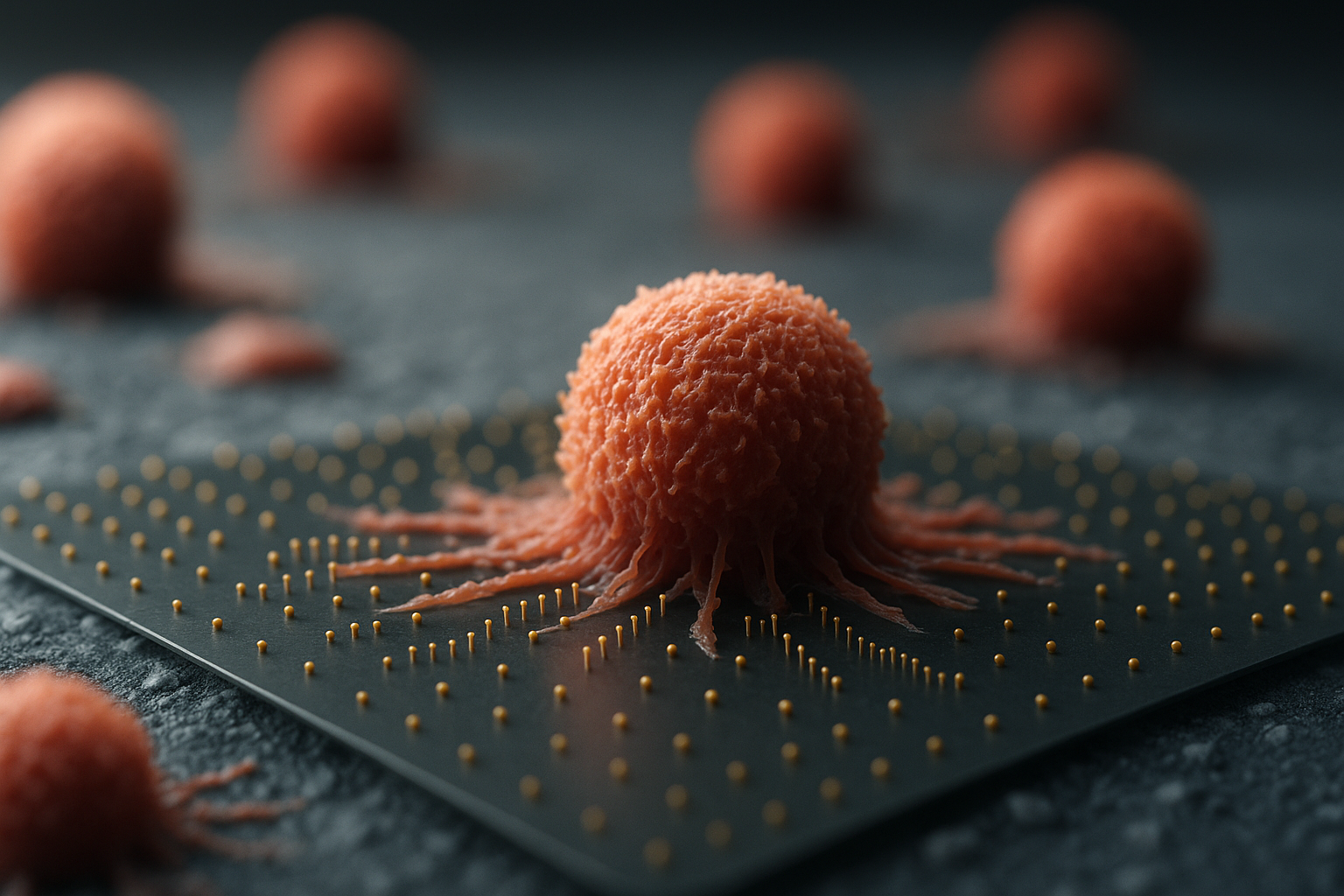
Surface functionalization has emerged as a pivotal practice in enhancing cell adhesion for advanced tissue engineering, regenerative medicine, and various biotechnological applications. In an era where cell-based assays are increasingly sophisticated, the success of research hinges on the ability to precisely control cellular environments. This blog post delves into the nuances of surface functionalization, discussing its importance in improving cell adhesion, the challenges posed by traditional methods, and recent technological advancements that are reshaping the landscape.
Understanding the Challenges of Traditional Cell Culture Methods
Limitations in Conventional Cell Culture Plates
Traditional cell culture plates have served the scientific community well, yet they harbor intrinsic limitations that compromise experimental outcomes. Typically constructed from polystyrene (PS) or polypropylene (PP), these materials often exhibit hydrophobic characteristics, which can inhibit optimal cell attachment. This is particularly problematic for sensitive cell types, such as primary cells or embryonic stem cells, which require robust adhesion for viability and function.
- Lack of hydrophilic properties that facilitate cell attachment.
- Inconsistent surface quality leading to variability in cell growth.
- Limited scalability for high-throughput screening applications.
Advancements in Surface Functionalization Techniques
Creating Favorable Surface Properties
Recent advancements in surface functionalization techniques have enabled the creation of surfaces that better mimic the natural cellular environment. Techniques such as plasma treatment or chemical coatings can significantly enhance the hydrophilicity of lab plastics, promoting stronger cell adhesion and proliferation. Surface treatments like tissue-culture (TC) coating are now standard for facilitating cellular studies with enhanced responsiveness and reproducibility.
- Plasma-treated surfaces enhance hydrophilicity without altering the base material.
- Protein coatings offer tailored binding sites to boost specific cell adhesion.
- Integration of peptides or other biomolecules that signal cellular behaviors.
The Role of Surface Engineering in Automated Laboratories
Integration with Advanced Workflows
The integration of enhanced cell culture surfaces into automated laboratory systems represents a significant leap forward for high-throughput research settings. The use of surface-engineered multiwell plates enables consistent results across large datasets, a demand driven by modern high-throughput screening (HTS) applications. Moreover, as laboratory robotics increasingly become integral to workflows, surface functionalization ensures compatibility with robotic handling and dispensing devices.
- Compatibility with automated systems reduces manual interference.
- Improved surface properties allow for seamless transitioning into high-throughput platforms.
- Reduction in variability leads to more reliable and actionable data.
Benefits of Incubator-based Imaging Systems
Enhancing Data Quality and Reproducibility
Deploying incubator-compatible live-cell imaging systems, such as the zenCELL owl, further amplifies the advantages of surface functionalization. These systems provide continuous, in-situ monitoring of cell behaviors without interrupting the incubation conditions. Live-cell imaging enables real-time assessments of cellular dynamics, ensuring that data acquisition is synchronized with experimental milestones.
- Liv-cell imaging provides uninterrupted, real-time data collection.
- Integration enhances reproducibility by minimizing environmental fluctuation.
- Facilitates groundbreaking studies in morphogenesis, cell motility, and other dynamic cellular processes.
Continue reading to explore more advanced insights and strategies.
„`
„`html
Nanotechnology in Surface Functionalization
Utilizing Nanostructured Surfaces for Optimized Cell Interactions
Nanotechnology has revolutionized the landscape of surface functionalization by introducing nanostructured surfaces that mimic natural extracellular environments. These surfaces, designed at a nanoscale, provide remarkable control over cellular microenvironments and offer enhanced surface area for cellular contact. Studies have demonstrated that cells exhibit more natural behaviors when interacting with nanostructured materials, enhancing functions such as gene expression profiles, differentiation, and proliferation. A notable example is the use of nanopatterned gold substrates, which have shown to improve the proliferation of osteoblasts and other cell types crucial for bone tissue engineering.
- Incorporate nanostructures to mimic extracellular matrix features.
- Use nanomaterials to improve cellular response in tissue engineering applications.
Biocompatibility and Surface Chemistry
Ensuring Optimal Interactions Through Chemical Modifications
Surface chemistry plays a critical role in biocompatibility and the ultimate success of cell-based applications. Chemical modifications to culture surfaces can drastically improve their affinity for specific cell types. For instance, covalent attachment of bioactive ligands can provide binding sites that mimic natural environments, thereby improving the specificity and strength of cell-surface interactions. Recent advancements have also led to the use of self-assembled monolayers (SAMs) to introduce specific chemical functionalities that modulate cell behavior effectively.
- Experiment with chemical coatings to enhance cell-specific adhesion.
- Optimize surface chemistry using SAMs for precise functionalization.
Cost-Benefit Analysis of Surface Functionalization Techniques
Assessing the Economic and Performance Impacts
The implementation of advanced surface functionalization techniques does come with increased initial costs. However, a thorough cost-benefit analysis reveals significant advantages in the long term, including enhanced experimental reproducibility, reduced reagent usage, and the potential for breakthrough discoveries. By minimizing experimental variability and enhancing data reliability, labs can reduce the frequency of repeat experiments, thus saving time and additional costs. One case study highlighted a substantial reduction in consumable usage when transitioning to advanced functionalized surfaces, leading to a cost saving of up to 30%.
- Invest in functionalization methods that offer long-term cost savings.
- Consider comprehensive analysis to measure potential ROI on technology adoption.
Applications in Drug Discovery and Development
Leveraging Functionalized Surfaces for Pharmaceutical Innovation
In the fast-paced world of drug discovery, precise, and scalable cellular models are imperative. Functionalized surfaces have become integral in providing reliable platforms for drug testing and screening. These surfaces ensure consistent cell growth and interaction, crucial for accurate pharmacokinetic and pharmacodynamic profiling. An exemplary application is in cancer research, where tumor cell lines on functionalized surfaces have shown improved modeling of tumor microenvironments, enabling better drug efficacy studies.
- Utilize functionalized surfaces for enhanced assay consistency in drug trials.
- Implement these surfaces early in the pipeline for better predictive assessments.
Environmental and Regulatory Considerations
Ensuring Compliance and Sustainability in Surface Treatments
As the biotechnological landscape advances, there is a growing need to consider environmental and regulatory implications of new technologies. Surface functionalization must comply with regulatory standards, ensuring safety and efficacy without adverse environmental impacts. Innovative approaches now focus on developing biodegradable materials and eco-friendly coatings, reducing the carbon footprint of lab operations. Companies leading in sustainable design have adopted green chemistry principles, resulting in reduced hazardous waste and energy use.
- Focus on eco-friendly materials that meet regulatory requirements.
- Adopt sustainable practices to minimize environmental impact.
Collaborative Advances and Cross-discipline Integration
Enhancing Surface Functionalization Through Interdisciplinary Collaboration
Collaboration among various scientific disciplines—such as chemistry, molecular biology, and materials science—is key to breakthroughs in surface functionalization. Joint efforts allow for the cross-pollination of ideas and methodologies that optimize functionalization techniques. Collaborative projects between academia and industry have accelerated the development of innovative products, setting the stage for rapid commercialization and wider application. For instance, partnerships have propelled innovations like bioactive hydrogels for enhanced cell encapsulation and delivery systems.
- Engage in interdisciplinary research for comprehensive surface solutions.
- Leverage academic-industrial partnerships to fast-track innovation.
Next, we'll wrap up with key takeaways, metrics, and a powerful conclusion.
„`
„`html
Future Directions in Surface Functionalization
Innovative Trends and Emerging Technologies
As research in surface functionalization continues to evolve, new trends and technologies are on the horizon. One promising area is the integration of artificial intelligence and machine learning to predict optimal surface modifications tailored for specific biological interactions. This computational approach could streamline the development process, allowing for rapid prototyping and testing. Additionally, the advent of 3D bioprinting promises to revolutionize how we create functionalized surfaces, offering unprecedented precision and customizability.
- Explore the use of AI in optimizing surface functionalization techniques.
- Invest in 3D bioprinting technologies for next-level surface design.
Real-World Case Studies
Demonstrating Successes and Overcoming Challenges
Case studies provide tangible insights into the practical applications and benefits of surface functionalization. One remarkable example involves the development of antimicrobial surfaces in hospital settings, significantly reducing transmission rates of infections. Another success story is the application of functionalized polymers in wearable medical devices, enhancing user comfort and sensor accuracy. Despite these successes, challenges remain, particularly in scalability and mass production, which require ongoing research and development to resolve.
- Examine case studies to understand implementation and impacts.
- Identify solutions to overcome challenges in scalability.
Global Impacts and Societal Benefits
Contributing to Health, Sustainability, and Innovation
The global implications of advancements in surface functionalization are vast, impacting health, sustainability, and technological innovation. Enhanced healthcare outcomes due to improved implant materials and diagnostic devices are just one dimension of its potential. Environmentally, adopting green, functionalized surfaces contributes to sustainability goals by reducing waste and promoting recycling. Societally, these advancements support economic growth by fostering new industries and job creation, emphasizing the multifaceted benefits of continued investment in this field.
- Highlight contributions to societal health and sustainability.
- Assess economic growth potentials driven by these innovations.
Conclusion
In conclusion, surface functionalization emerges as a transformative frontier in scientific and technological innovation, promising profound implications across diverse industries, from healthcare to sustainability. A review of current practices reveals its role in enhancing cell adhesion, optimizing biocompatibility, and advancing drug discovery. These techniques not only improve the reliability and efficiency of experimental models but also drive down costs through increased reproducibility and reduced resource consumption.
The value of surface functionalization is underscored by its capacity to mimic physiological environments, enabling highly specific cellular interactions that are critical for tissue engineering and regenerative medicine. The integration of new technologies like AI, 3D bioprinting, and sustainable materials further positions this field at the forefront of next-gen solutions to complex biological challenges. Case studies highlight real-world successes in reducing healthcare-associated infections and improving the functionality of medical devices, showcasing the practical benefits and scalability potential of these innovations.
As we forge ahead, fostering interdisciplinary collaborations and engaging in eco-friendly practices will be crucial for overcoming existing hurdles and unlocking new possibilities. We must embrace these innovations with a view toward creating safer, more effective, and sustainable products. Our collective efforts can not only advance scientific boundaries but also champion socio-economic growth and global health betterment.
The journey of surface functionalization is ongoing, inviting researchers, industries, and institutions alike to explore, innovate, and collaborate. By investing in cutting-edge technologies and sustainable approaches, we stand on the cusp of remarkable breakthroughs that could reshape the fabric of technological progress. Together, let us redefine what’s possible, striving for a future where scientific excellence and ecological responsibility go hand in hand.
„`
 German
  English
Leave a Reply